
Demolition and Debris Removal in Dubai: How It Is Done Right
Demolition looks like the easiest part of a renovation — just “tear out everything you don’t need.” In reality, this is where most problems begin: cracks in slabs and in neighbouring units, a scratched lift, common areas buried in debris, fines from the building management and blown deadlines. On a project in the Palm Jumeirah area we ran the full demolition-and-debris-removal cycle — and here we show what this “invisible” work looks like when it is done right.
Why demolition is the first test of a contractor
Long before the finishing stage, a contractor reveals their standard: whether the space is protected, how openings in concrete are cut, and where the debris actually goes. Mistakes here are the most expensive — a crack in a load-bearing slab or a damaged lift is far harder to fix than re-hanging wallpaper. That is why we treat demolition as an engineering operation, not as “knocking things down.”
Preparation: the work starts before the first blow
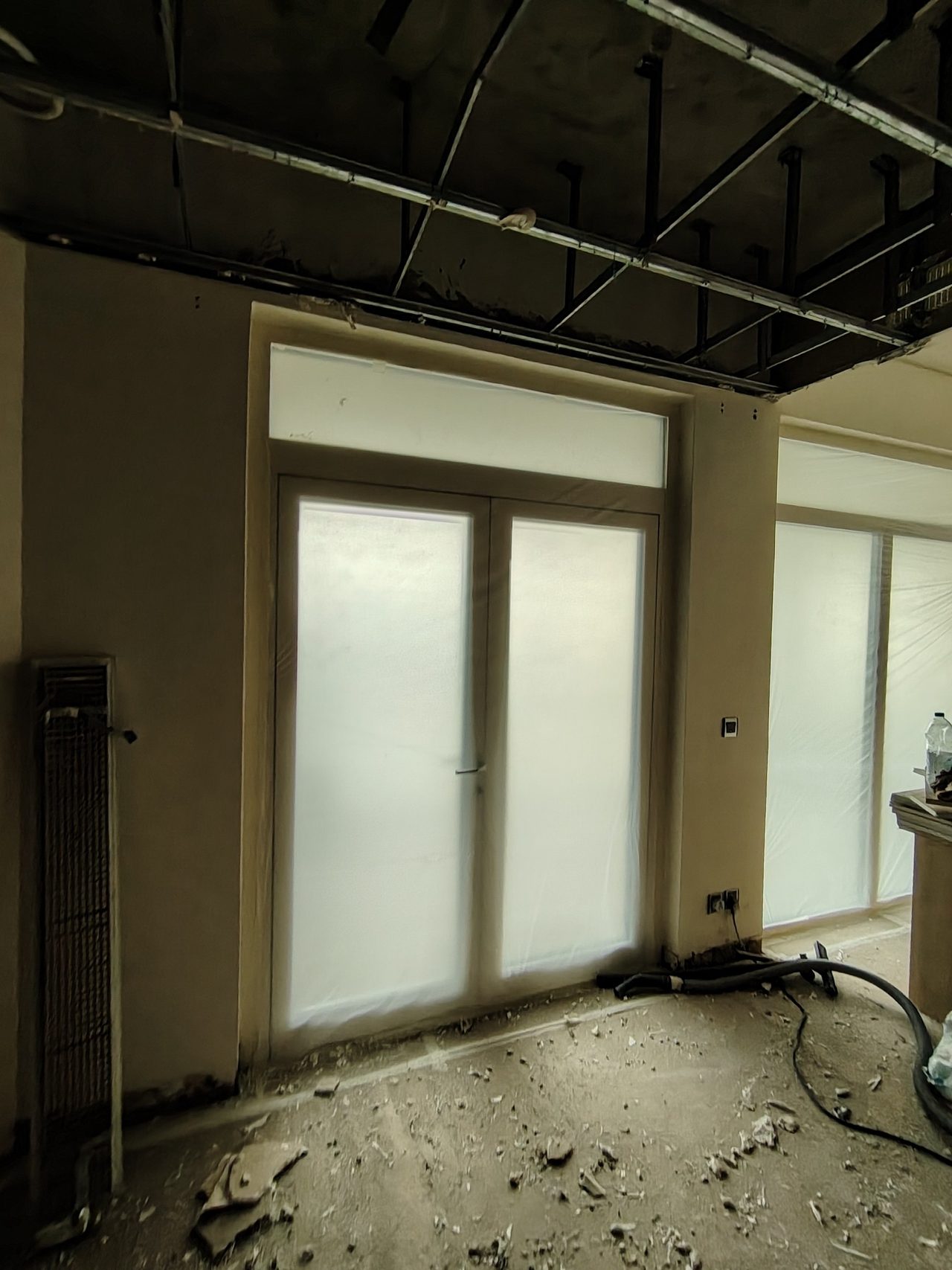
Before demolition we protect everything that stays: floors with film and cardboard, windows and glazing with protective film and boards, and we set up safe removal routes. In premium communities such as Palm Jumeirah, protecting the common areas — the lift, lobby and corridors — is a task of its own. A damaged lift or a dirty lobby means a complaint from the building management and a work stoppage, so this is not a “minor detail” but part of the method.
Precise demolition instead of a sledgehammer
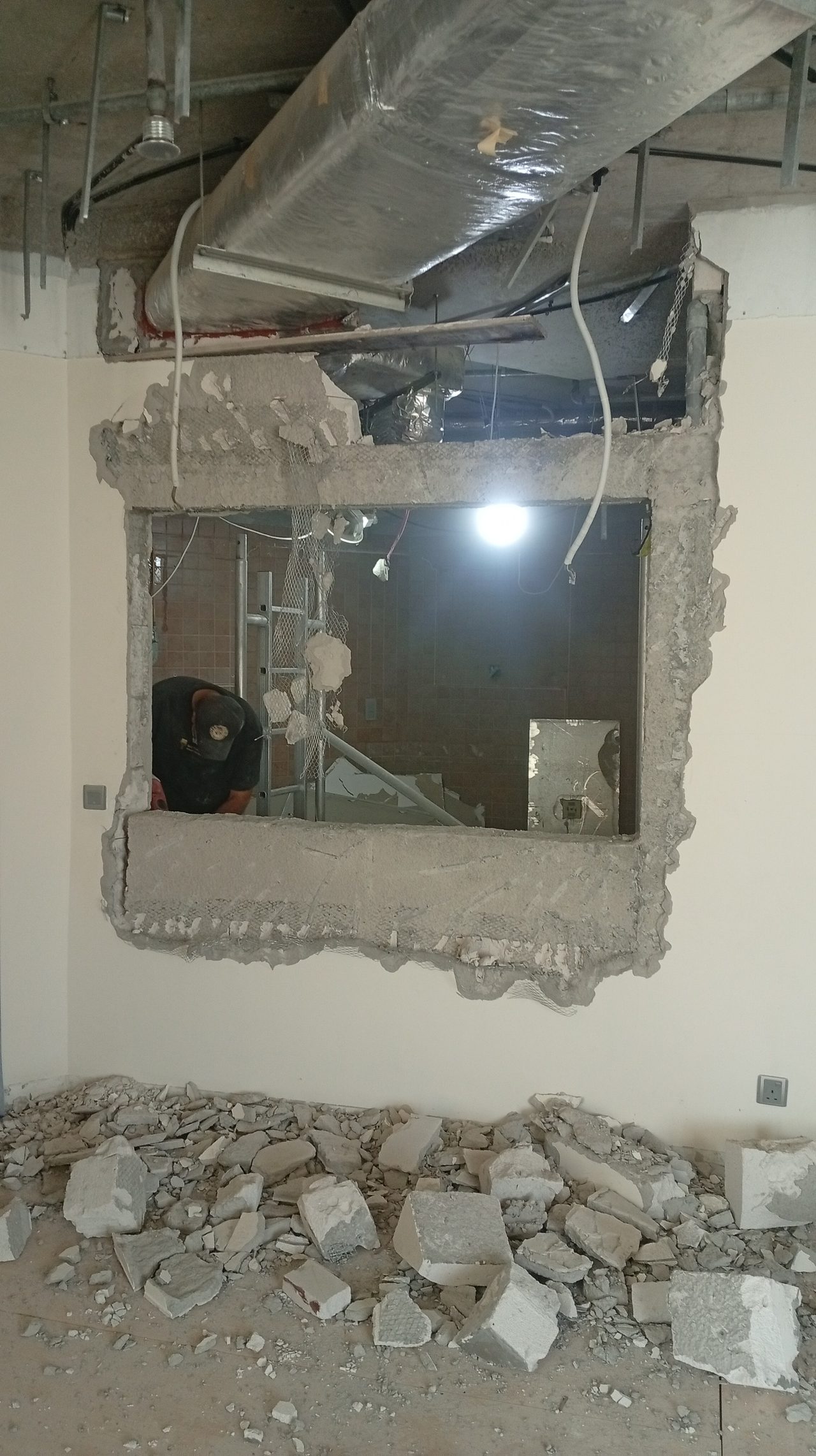
Demolition follows a strict order: first the finishes come off (tiling, final electrical and plumbing fixtures, old water pipes), then the lightweight partitions, and only at the end do we touch load-bearing and reinforced-concrete structures. This sequence rules out the “domino effect,” where rushing to knock down one wall causes damage where nobody expected it.
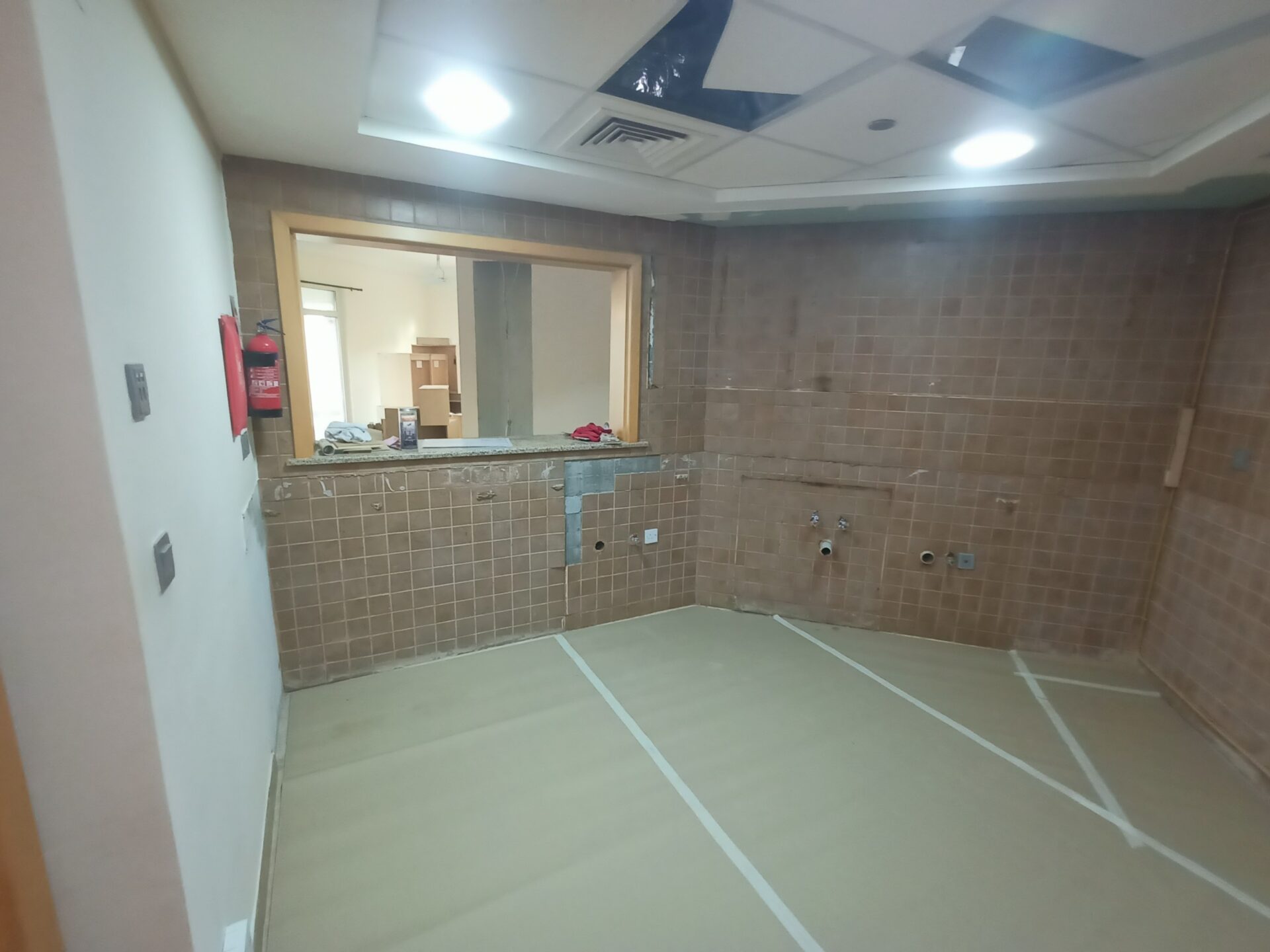
Block and brick partitions are dismantled carefully, with attention to hidden services — in older apartments, walls often conceal pipes and cables that appear on no drawing at all.
Diamond cutting: openings without cracks or dust
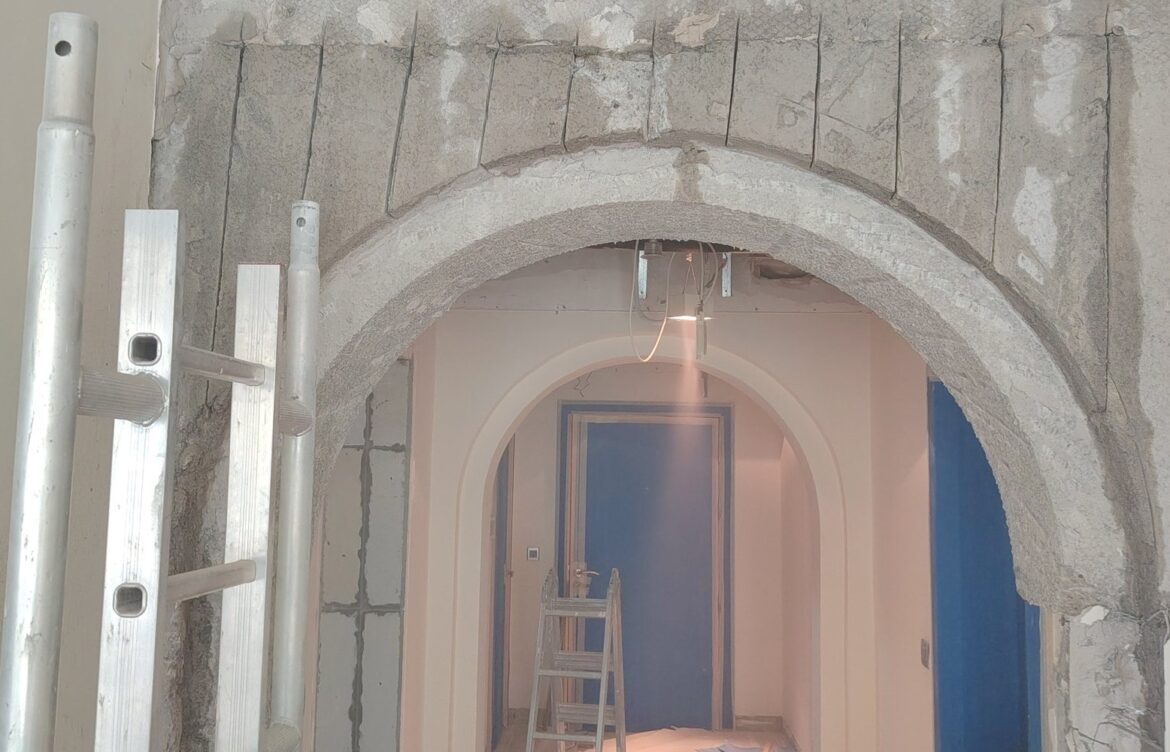
We open up concrete with diamond cutting rather than a rotary hammer. This gives clean geometry — even complex arched shapes (like the one in the photo at the top of this article) — minimal vibration and dust, and, most importantly, it preserves the load-bearing capacity of the slab. A rotary hammer in a structural wall means micro-cracks that only show up later, once the walls are finished.
Sorting and bagging the debris
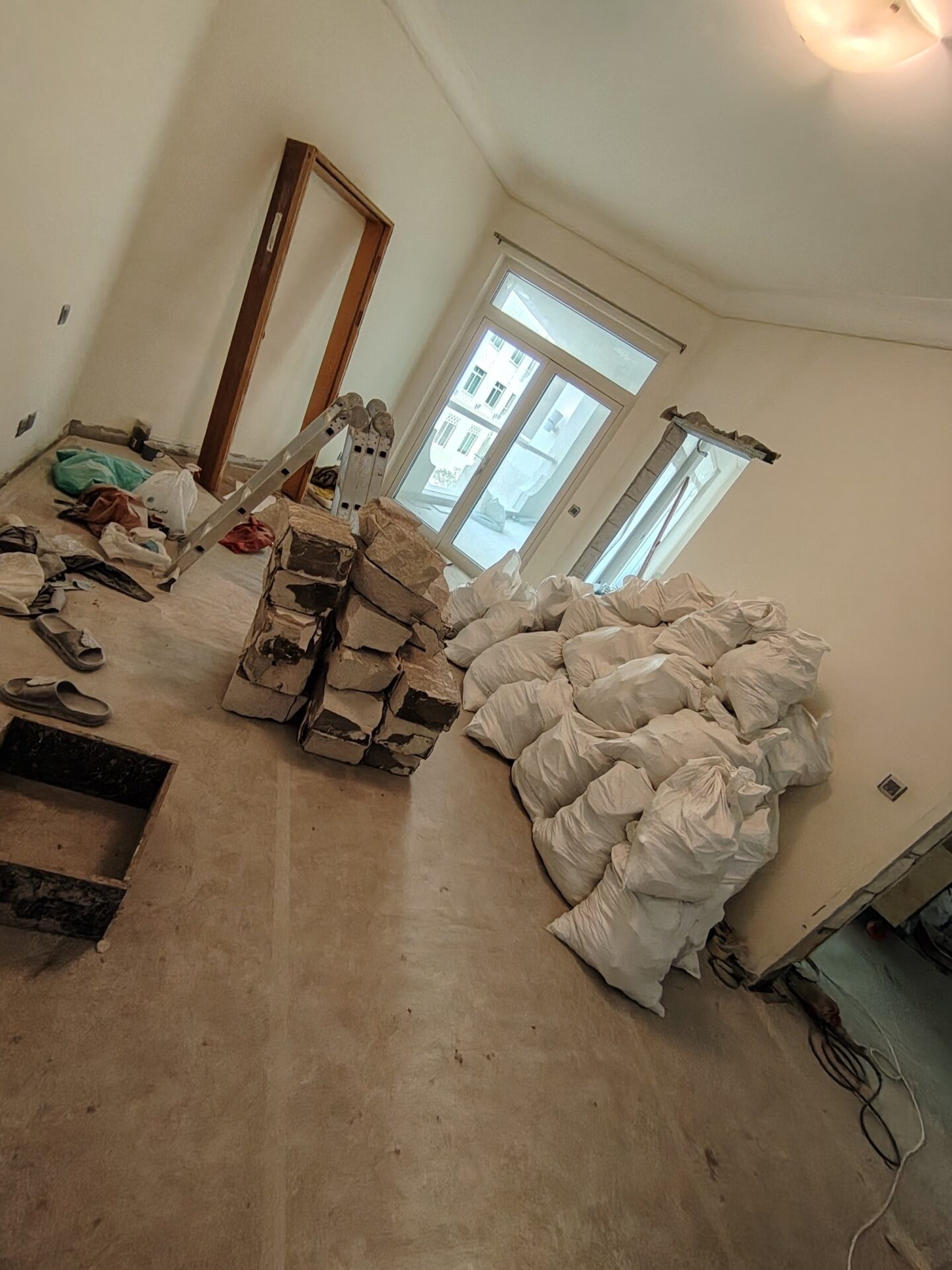
Construction debris is not piled up “until the renovation is finished.” It is sorted and bagged right on the floor as work proceeds. This keeps the site clean and safe, speeds up removal, and avoids the situation where heaps of rubble sit for months inside the apartment and in the common areas.
Controlled removal

Removal follows a schedule and route agreed with the building management, with the lift and common areas protected. Bags are taken down and loaded onto the truck, and the waste is hauled away in line with community and Dubai municipality rules. For the neighbours, it all passes almost unnoticed — no piles on the landing and no conflicts.
What this means for the owner
- Schedule. A clean site and steady removal keep the next stages on track.
- Protection. An intact lift, lobby and neighbouring units — no complaints, no fines.
- Structural safety. Diamond cutting and a staged sequence protect load-bearing slabs from cracks.
- Peace of mind. Relations with the building management and neighbours stay healthy.
Demolition is not about force — it is about discipline and control. It is the clearest early sign of how a contractor will run the entire project.
Planning a renovation in Dubai? Get a preliminary estimate and a consultation — send us a request.