
Electrical Wiring in a Dubai Renovation: How It Is Done Right
You never see the wiring — it is hidden in the walls and floor. That is exactly why people cut corners on it, and exactly why mistakes here are the most expensive: redoing wiring after the finishes are in means opening up walls, tiling and ceilings all over again. In an apartment at Atlantis The Royal we ran the full electrical cycle — here is what wiring looks like when it is done properly.
Why electrical mistakes cost the most
Wiring is installed before plastering and screed and is literally sealed into the structure. If a point is in the wrong place or a cable cross-section is undersized, you are opening walls after the renovation — and in the worst case dealing with overheating and fire risk. So it all starts with a design: where the light, scenes, appliances and furniture go — and the circuits and cable sizes are calculated around that.
First — remove the old wiring
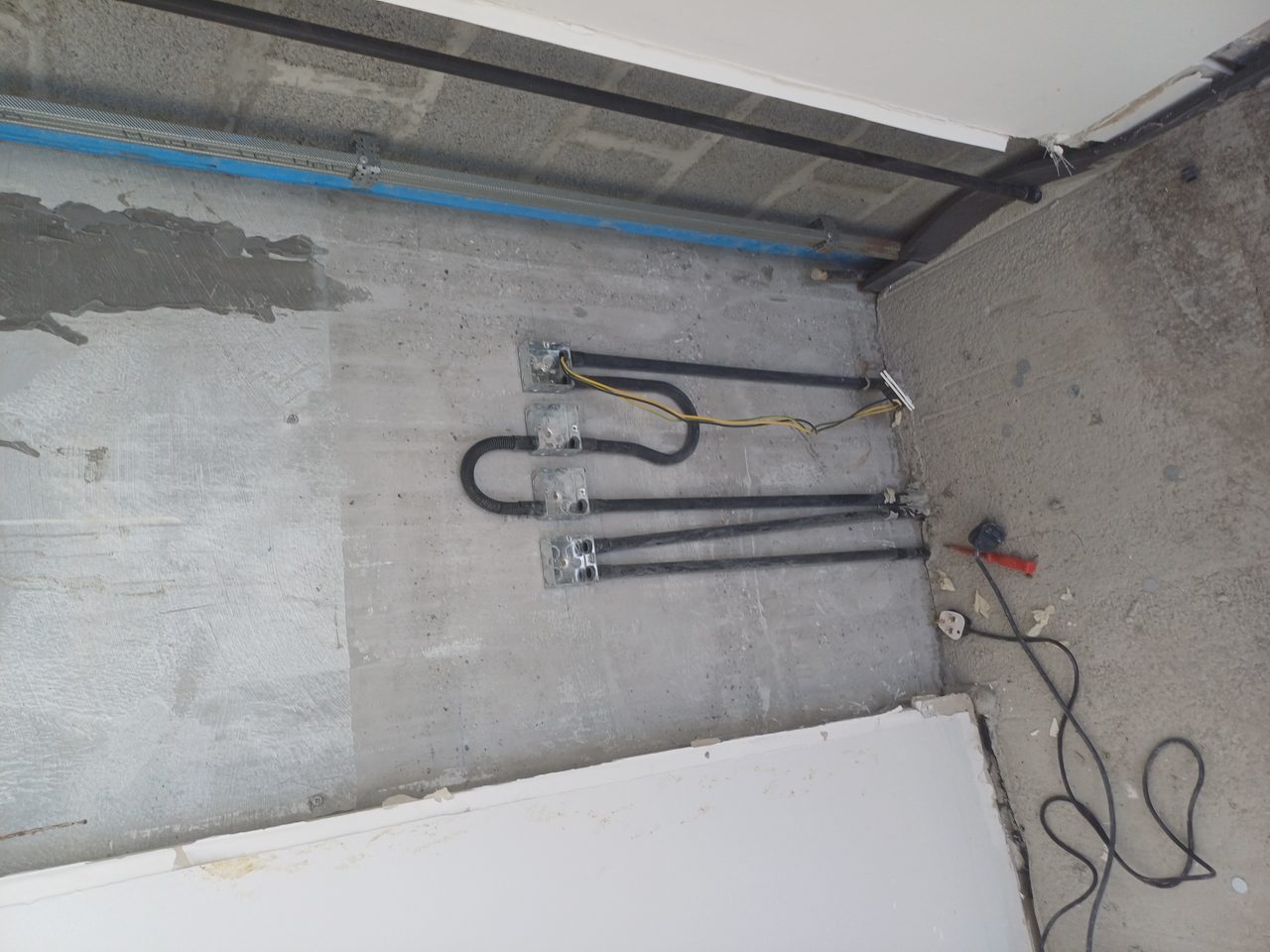
The old wiring is removed completely. We do not tap into what was there; we design the network from scratch for the new layout and loads: air conditioning, kitchen, underfloor heating, smart-home. In premium properties the loads are serious — old schemes simply cannot carry them.
Chasing the walls for cable runs
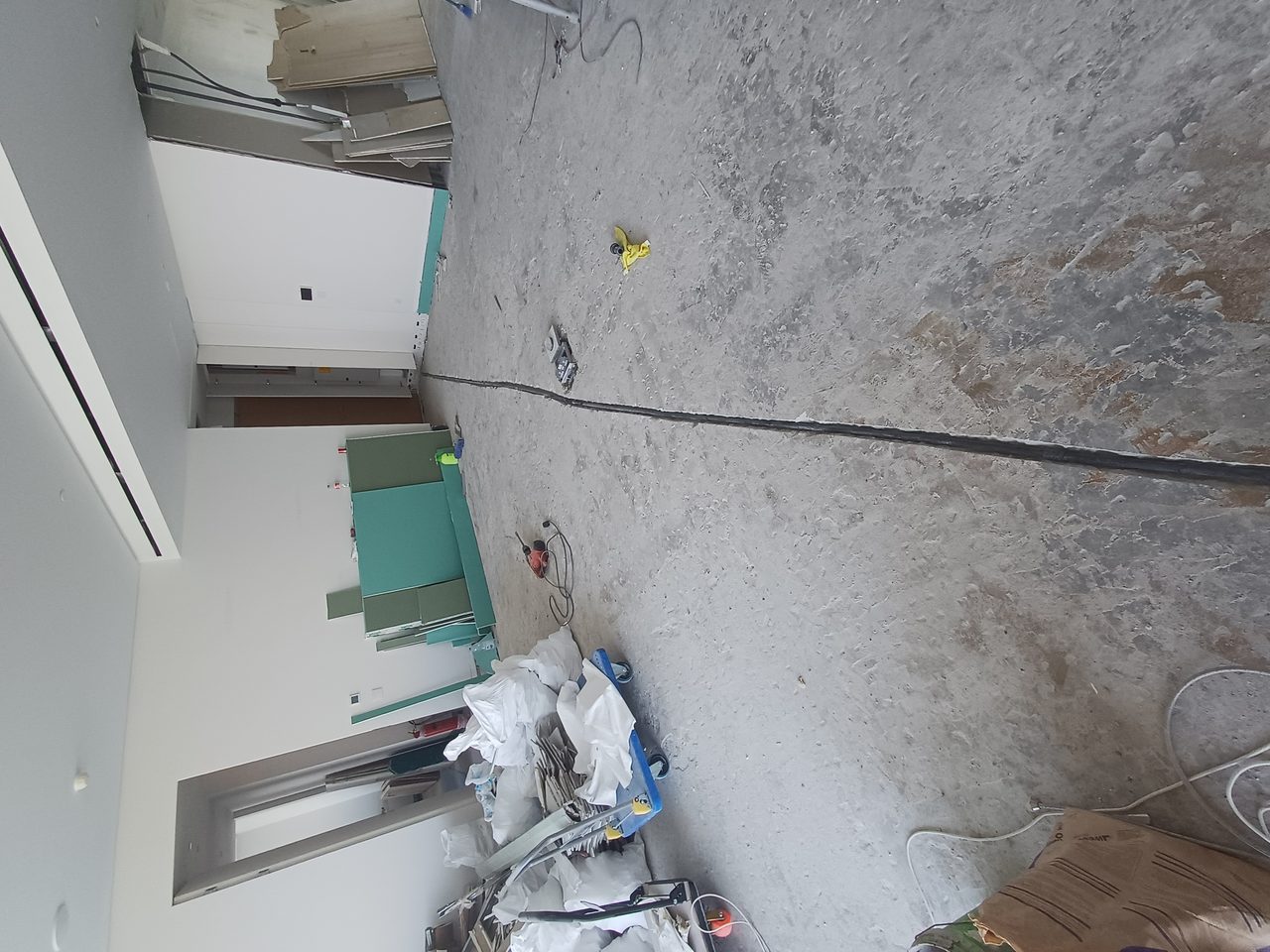
Cable runs sit in chases — strictly vertical and horizontal, by the rules. That way, when someone later drills the wall for a shelf or a picture, they will not hit a cable. A chaotic diagonal chase is a sure sign of an amateur.
Chasing the floor
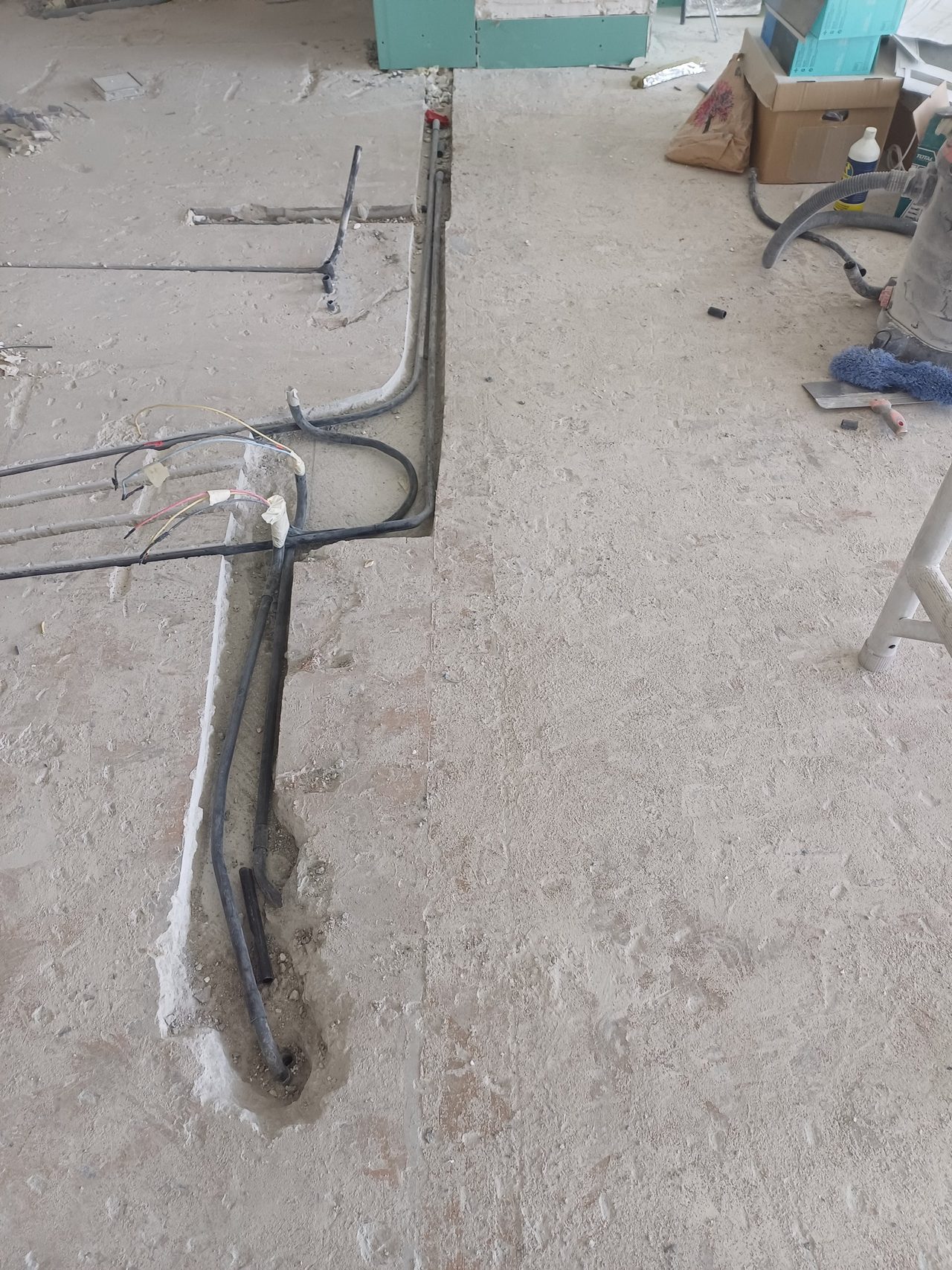
Some lines — to the kitchen island, to floor sockets and to points in the centre of rooms — run in the floor screed. The channels are cut carefully, without weakening the slab.
Back-boxes and junction boxes
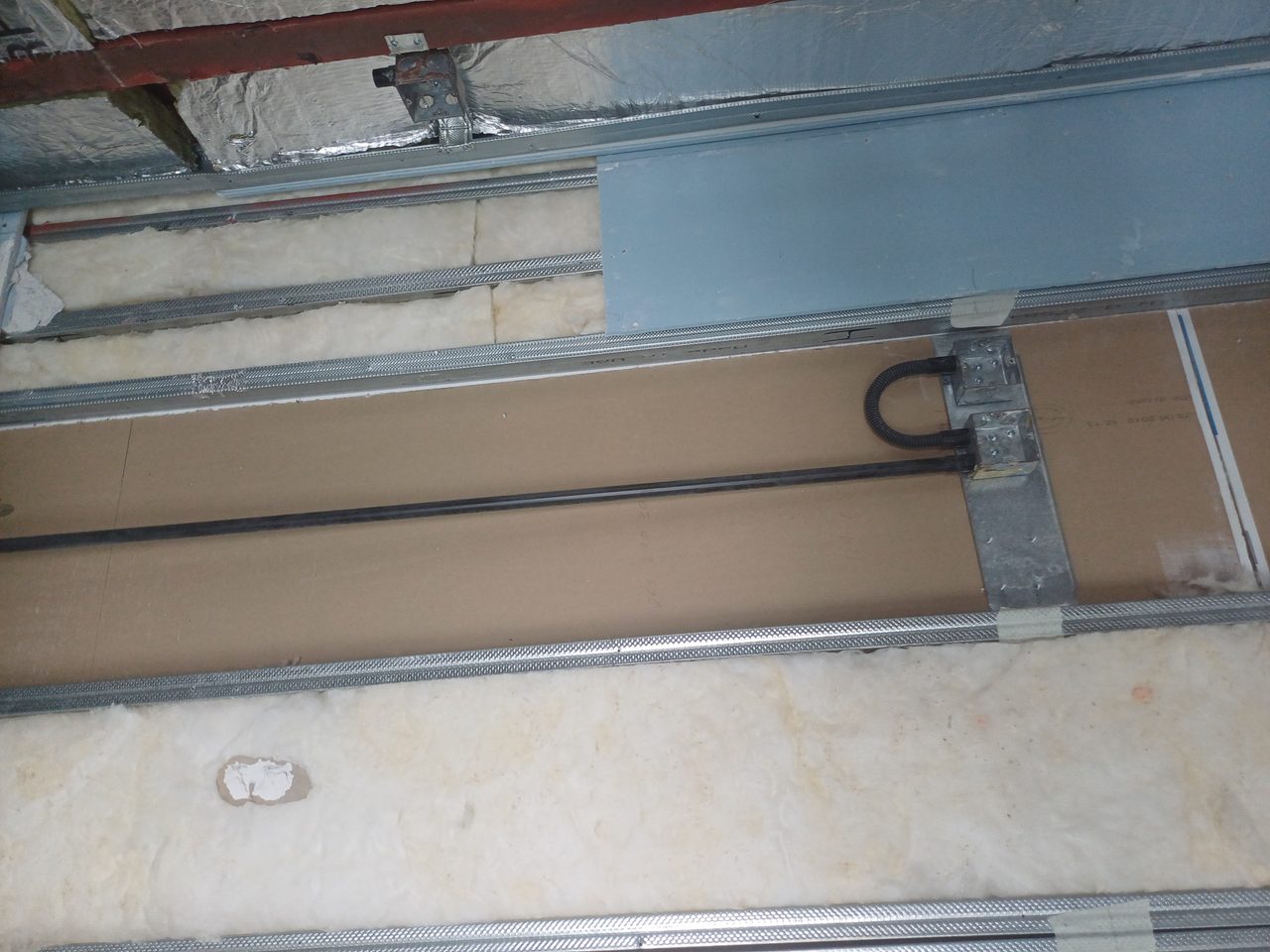
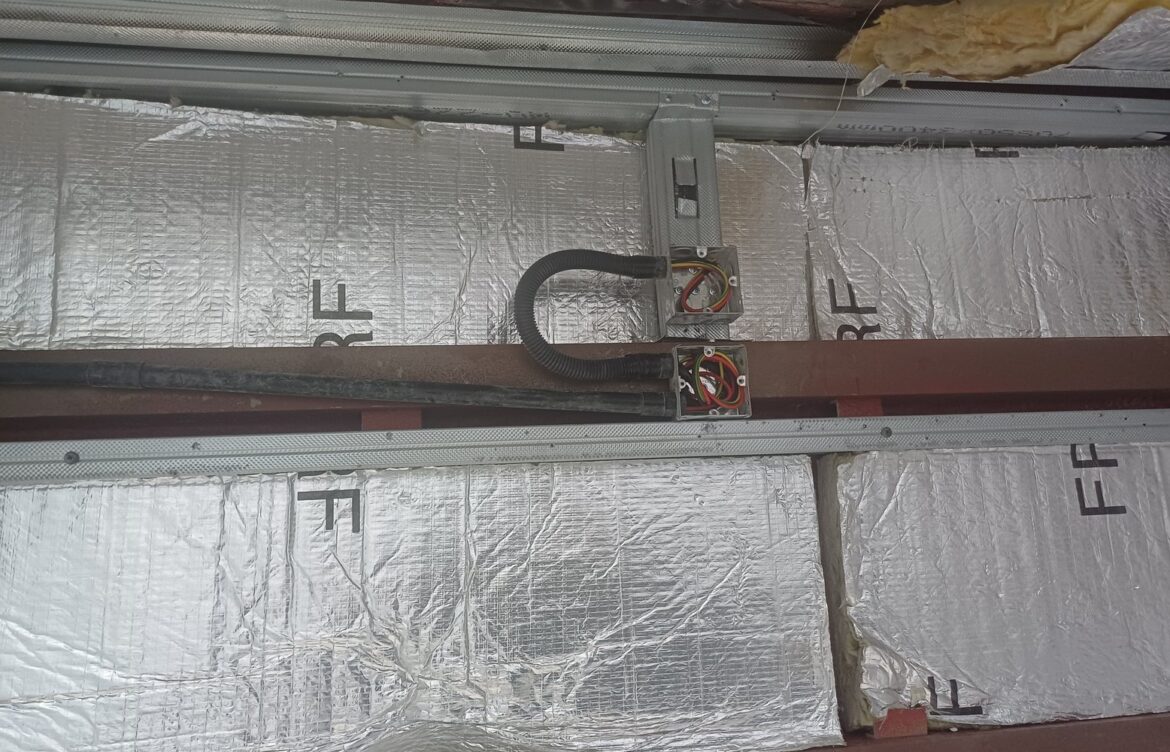
Back-boxes and junction boxes are set on one plane and at common heights — both for aesthetics (level faceplates later) and for serviceability. The distribution is planned so every circuit can be found and maintained.
Routing cables by circuits
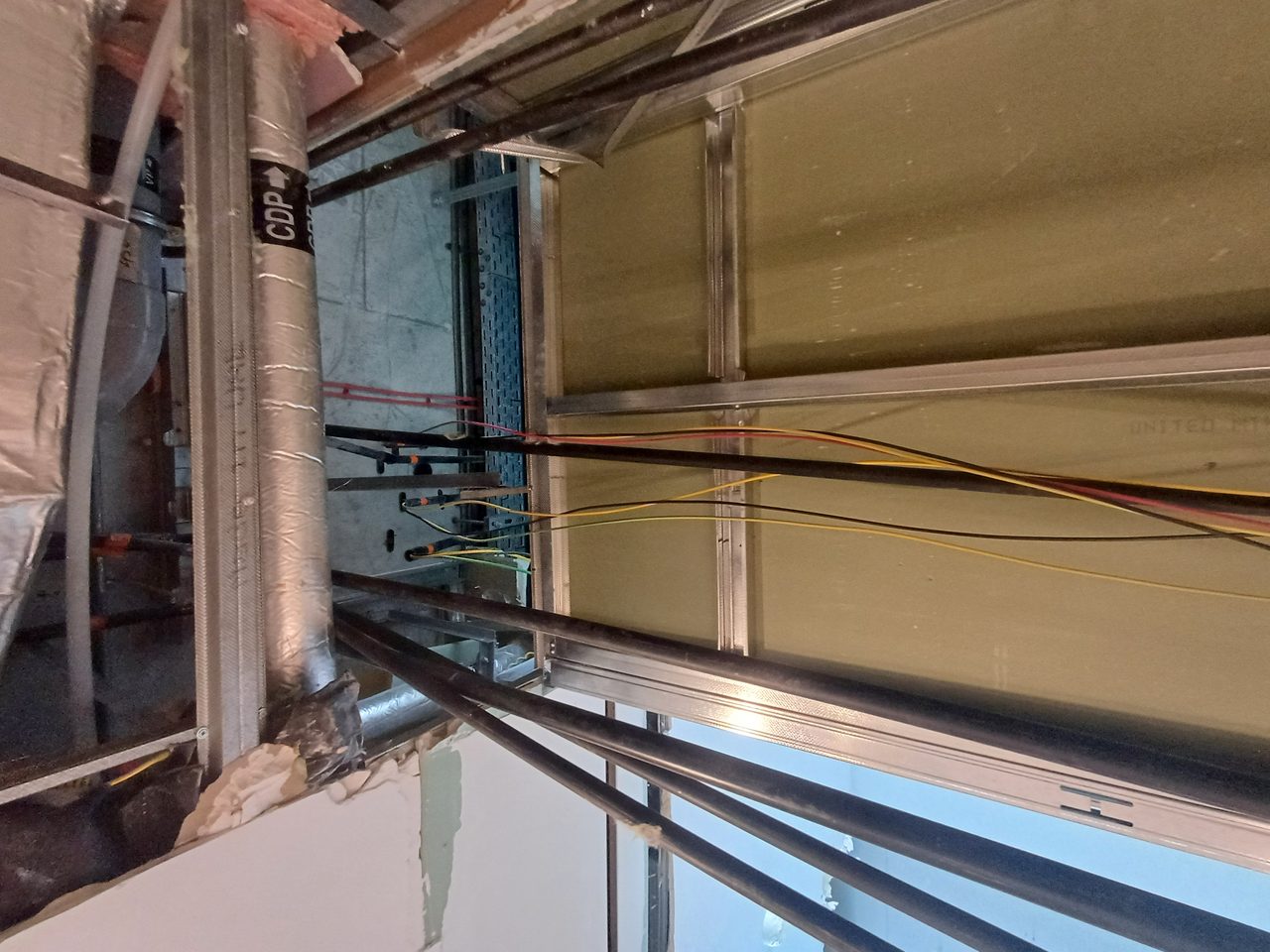
Cables are split into separate circuits: lighting, sockets, heavy appliances, air conditioners — each on its own breaker. Cross-sections are chosen for the load. A consistent routing standard and labelling mean the scheme can be understood years later without archaeology.
Circuit testing — what sets professionals apart
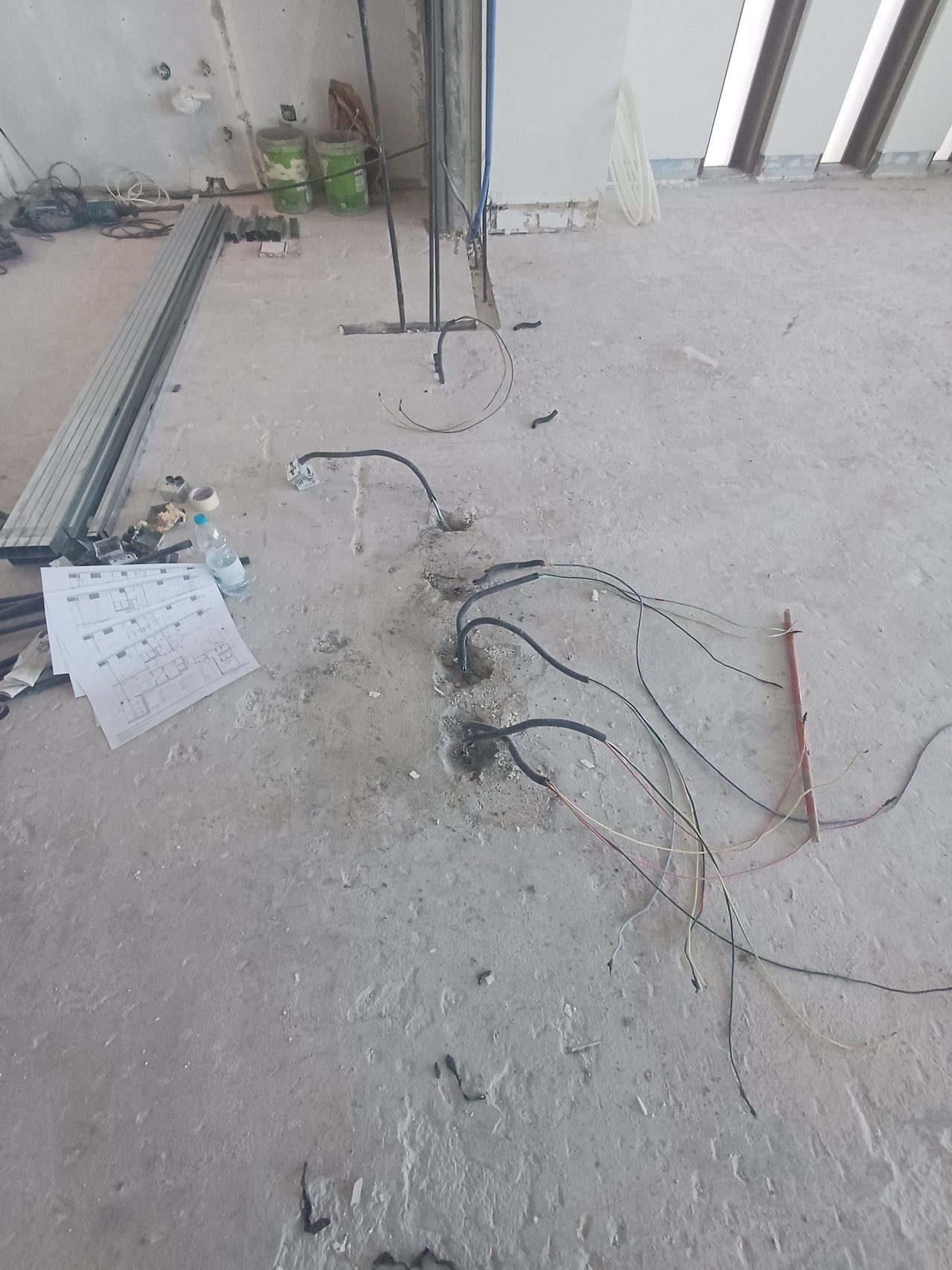
Before anything is closed up with plaster, we run full circuit testing: insulation resistance, line continuity, no short circuits. A defect is caught while the walls are open, not after move-in. In Dubai this is also about compliance with DEWA requirements.
What this means for the owner
- Safety. Correct cross-sections, circuits and breakers, with testing before the walls are closed.
- No surprises. No tearing into finished surfaces because of a forgotten point.
- Smart-home ready. Lines and circuits are laid in for future automation.
- DEWA compliance. No issues at connection or inspection.
Planning a renovation in Dubai? Get a preliminary estimate and a consultation — send us a request.