
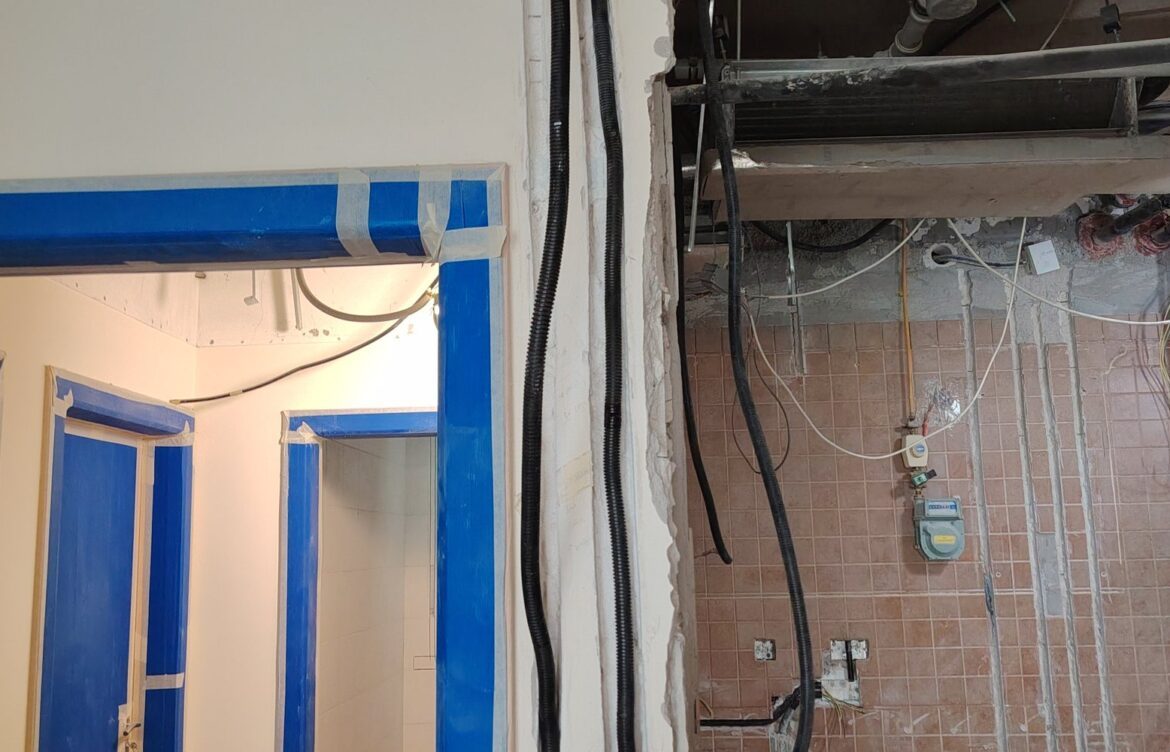
Apartment Renovation in Dubai: Turnkey Rough Stage in Shoreline
What is included in the rough stage of apartment renovation in Dubai
The rough stage is the foundation of any fit-out project: demolition, opening preparations, MEP (mechanical, electrical, plumbing) works, rough ceilings, screeds, plastering, waterproofing and surface preparation for finish materials. In an apartment in the Shoreline area this stage is especially important due to building management requirements, restrictions on noisy works and the need to coordinate engineering changes.
For a full turnkey renovation the budget is formed not only from direct works. The estimate should include the BOQ, drawings, NOC, coordination with building management, temporary protection of common areas, waste disposal and a contingency for hidden works. This reduces the risk of the project being stopped mid-renovation.
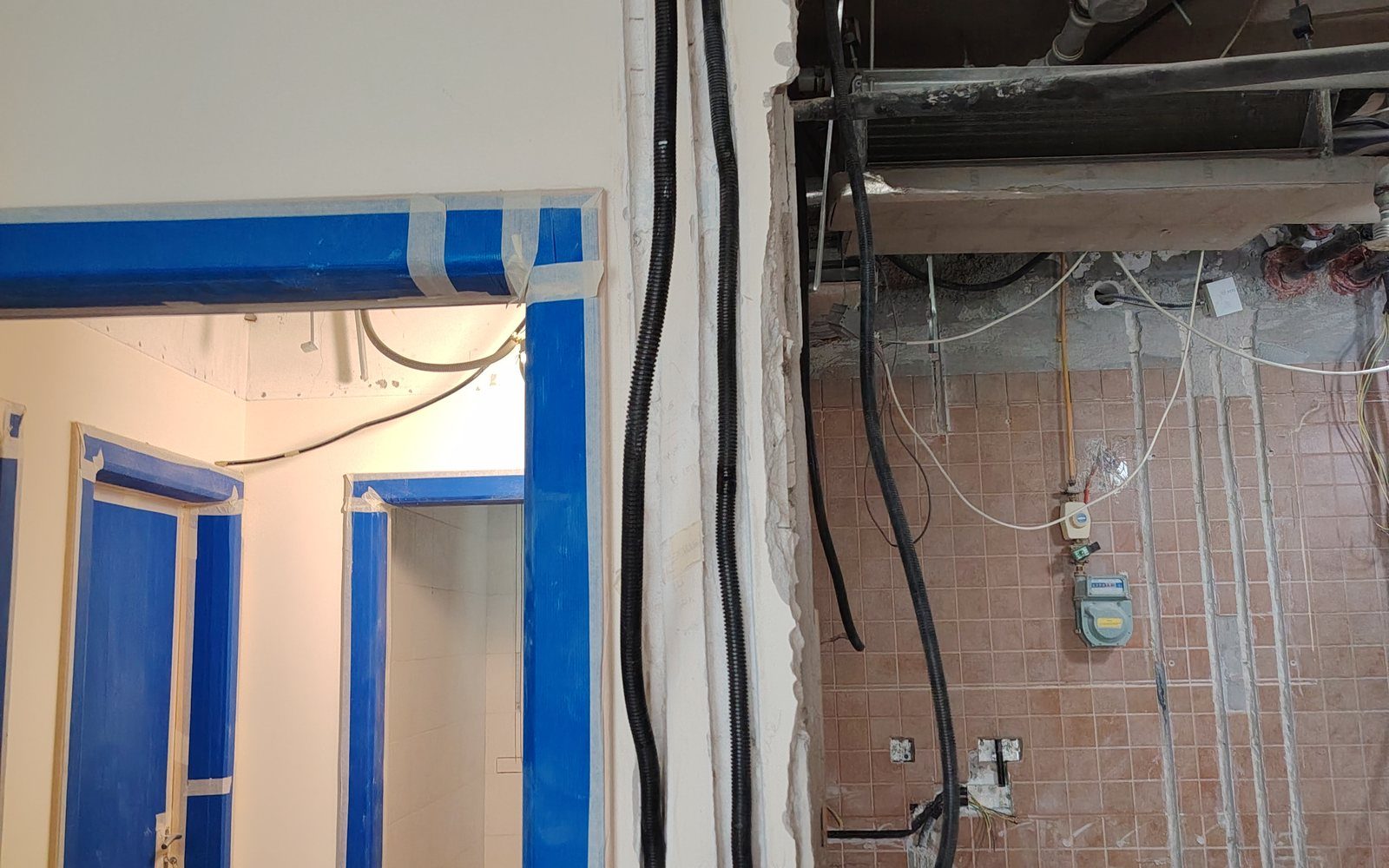
Permits, NOC and approvals with the building management
In Dubai the rough renovation of an apartment cannot be considered separately from the permitting process. Before active works begin you need to check the building rules, prepare drawings, obtain the NOC and arrange contractor access. For properties in Shoreline this is critical: any works involving water, electricity, ventilation, openings and façade elements may require additional approval.
- NOC and approvals: are either budgeted as a separate line item or distributed across BOQ positions depending on the contract structure.
- Drawings: are required for electrical, plumbing, ceilings, ventilation, demolition and new partitions.
- Work schedule: must take into account the 6-day working week, noise restrictions and possible delays in approvals.
- Access and logistics: lifts, corridors, loading areas and waste removal must be coordinated in advance.
A practical approach is to include the permitting scope in the BOQ before mobilization. This helps avoid disputed additional invoices and delays.
Demolition: ceilings, partitions, tiles and built-in furniture
Demolition during the rough stage includes removal of gypsum board ceilings, metal frames, skirtings, interior doors, built-in wardrobes, kitchen units, old sanitaryware and finishing electrical fixtures. In bathrooms this also includes removal of the bathtub, toilets, basins, mixers, drains, old screed and tiles.
Particular attention is required when working with concrete and block partitions. Diamond cutting and core drilling are used where control of vibration, dust and precision of openings is important. For apartments in residential towers this is safer than rough impact demolition.
- Protection of doors, windows, floors and common areas is carried out before demolition begins.
- Waste is sorted and bagged to avoid damaging lifts and corridors.
- Noisy works are scheduled during permitted hours.
- After demolition a check of hidden engineering routes is conducted.
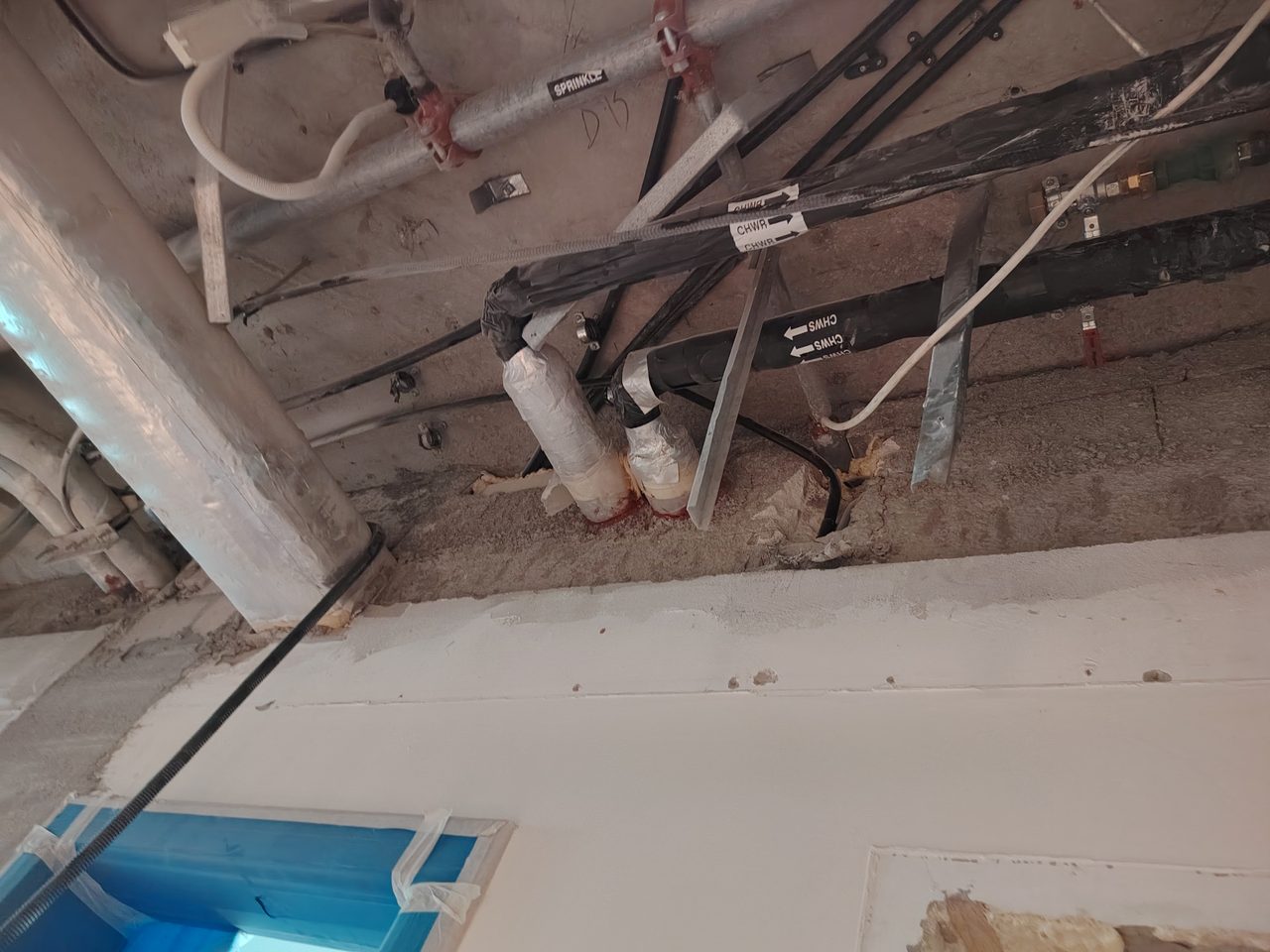
Electrical: new lighting circuits and cable routing
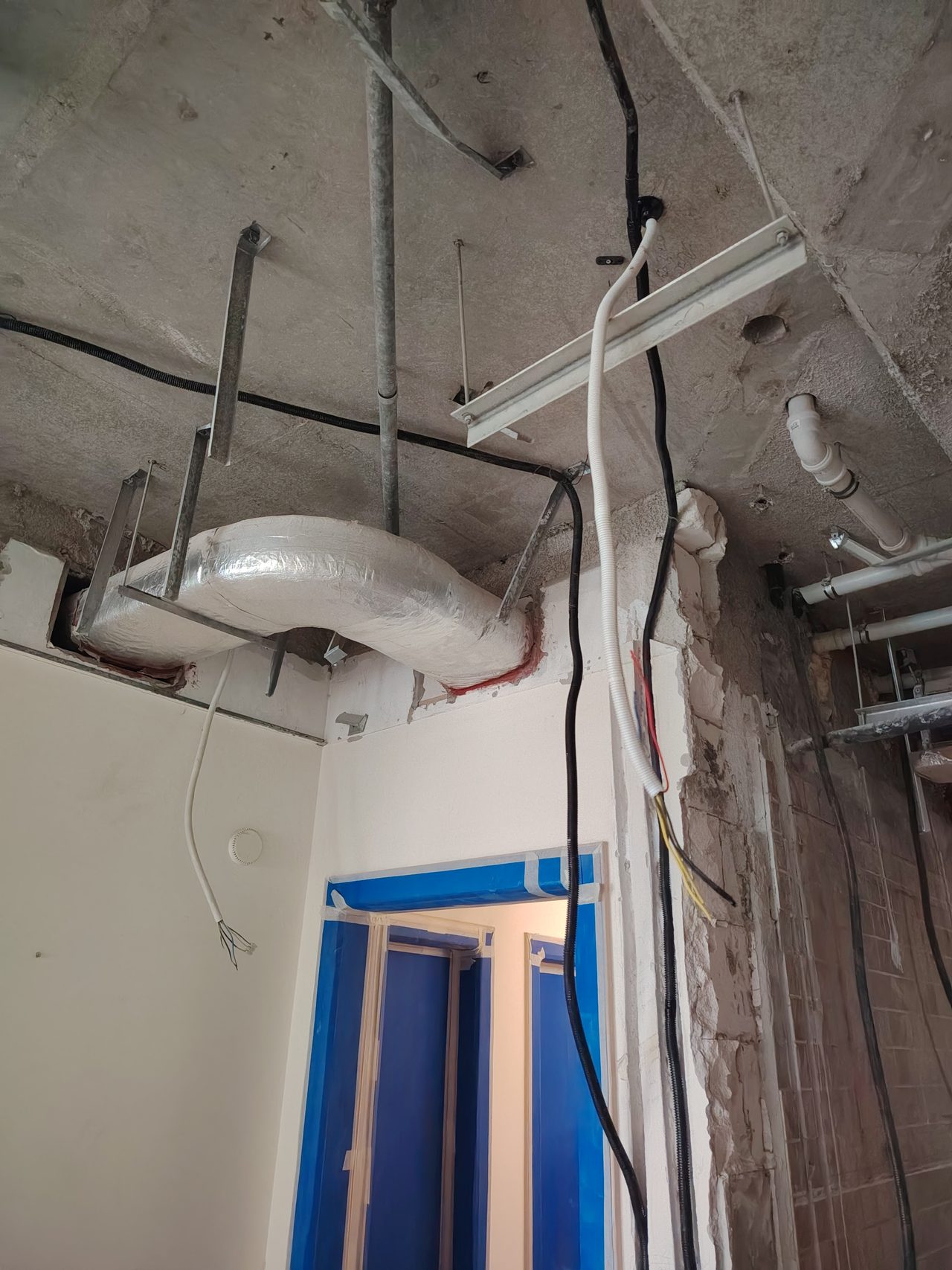
After demolition the engineering phase begins. In an apartment with a revised layout it is often necessary not just to replace sockets but to reconfigure the entire lighting logic: separate circuits for the dining room, living room, kitchen, corridors, bathrooms, study and bedrooms.
Works include chasing walls, routing cables in conduit, installing back boxes and junction boxes, preparing lines for decorative lighting, ceiling fixtures, wall sconces, ventilation grilles and smart controls. It is important to agree the furniture layout, kitchen appliances, mirrors, TV zones and workstations in advance.
- Dining room and living room: often have several lighting scenarios — general, decorative, accent and evening.
- Kitchen: requires dedicated circuits for appliances, under-cabinet lighting and the hood.
- Bathrooms: need lines for mirrors, ventilation, IP-rated fixtures and sockets.
- Balcony: adding water and power points requires careful waterproofing and building approval.
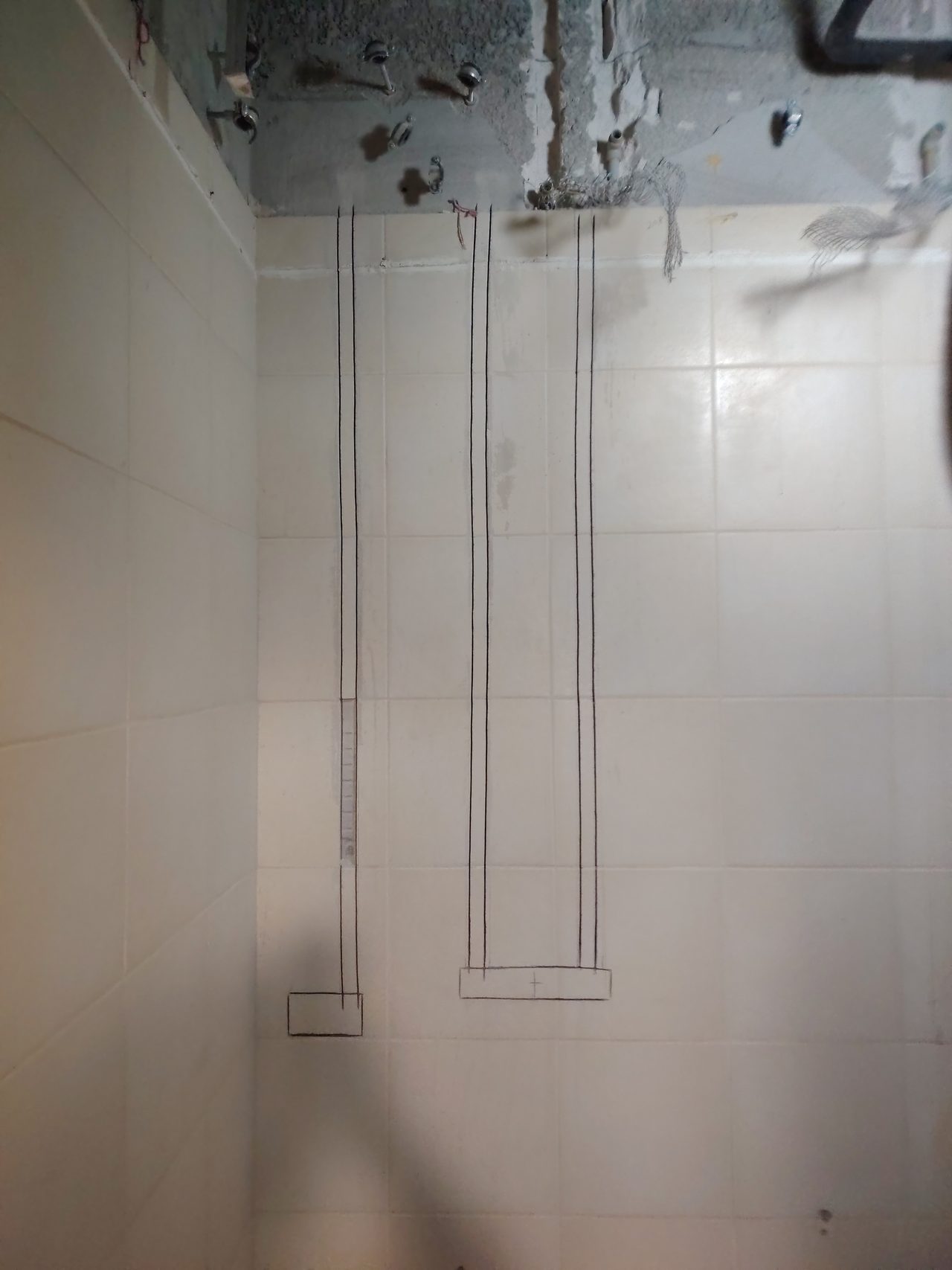
Plumbing: replacement of water supply pipes and bathroom preparation
In the rough renovation of an apartment in Dubai replacing water supply pipes must be done before closing walls, ceilings and screeds. In a full refurbishment the length of routes can reach tens of meters, especially if kitchens, guest toilet, master toilet, powder room and balcony zones are being relocated.
Typical workflow: removal of old taps and mixers, temporary capping of points, laying new pipes, checking sewer slopes, installing drains, preparing in-wall frames for concealed cisterns, pressure testing and photo documentation of routes. All concealed connections must be available for inspection before closing.
- Bathrooms receive screed, priming, waterproofing and preparation for tiling.
- For mosaic tiles the substrate must be especially flat, without dips or waves.
- Water points on the balcony must be checked for permissibility under building rules.
- After MEP distribution is completed a record drawing of hidden routes is produced.
Ceilings, ventilation and complex architectural elements
The rough stage often includes preparing ceilings for linear ventilation grilles, new lighting scenarios and decorative forms. Radius ceilings in a study, curved reveals and an arch in the kitchen require higher precision than standard gypsum board works.
Before ceiling installation it is important to agree heights, the locations of diffusers, access panels, fire detectors, light fittings and cornice niches. If old ducts are removed or the ventilation layout changes, the design must be checked for compatibility with the building system.
- Linear ventilation grilles require an exact frame and even geometry.
- Curved elements should be included in the drawings, not improvised on site.
- Access to dampers, filters and service units must not be permanently blocked.
- Ceiling works are carried out after primary cable and ventilation routes are completed.
BOQ, budget and control of additional work
For a turnkey apartment renovation in Dubai the BOQ must reflect not only visible works but also hidden processes: protection, mobilization, waste removal, NOC, drawings, minor unforeseen items, coordination and engineering adjustments. If new works are added during the project — for example extended electrical scope, pipe replacement, a balcony water point, mosaic tiling or complex curved ceilings — they should be issued as variation orders.
A correct budget structure helps the client understand what is already included and what is considered a scope change. For apartments with a complex rough stage in Dubai it is sensible to keep a contingency for hidden works, especially when old partitions, ceilings and engineering shafts are opened up.
- All changes should include a description, quantity, cost and impact on the schedule.
- Hidden works are documented with photos before closing.
- Payment milestones are tied to actual progress.
- The final BOQ must match the approved drawings and scope of work.
Timing of the rough stage and schedule management
The duration of the rough stage depends on the apartment size, demolition scope, number of bathrooms, electrical complexity, need for pipe replacement and the speed of approvals. If the schedule is based on a 6-day working week it is important to account for non-working days, public holidays, building restrictions and time for inspections.
For a project that must be completed by a fixed date it is better to manage the schedule by zones: demolition, MEP first-fix, plumbing, ceilings, plastering, screeds, waterproofing, substrate preparation for tiling and quality control. This approach allows parallel workstreams without losing control.
- The critical path usually goes through NOC, demolition, MEP and bathrooms.
- Ceilings must not be closed until cables, ventilation and pipes are checked.
- Tiling does not start until the substrate and waterproofing are ready.
- Each stage should finish with a checklist and photo documentation.
How to choose a contractor for the rough renovation in Dubai
A reliable fit-out company must be able to work not only with hands but also with documents: BOQ, drawings, NOC, schedule, variation orders and reporting. For apartments in Shoreline and other Dubai residential complexes experience dealing with building management, careful logistics and understanding the building’s engineering constraints are especially important.
Before starting it is recommended to request a consultation, conduct a site visit, review the existing drawings and obtain a clear scope of work. This will allow you to assess the budget, schedule, risks and approval sequence before demolition begins.
To get a consultation on apartment renovation in Dubai, submit a request through the form on the website. A specialist will prepare a preliminary work plan, list of required approvals and a BOQ structure for your property.