
Surface Protection During Bathroom Renovation in Dubai Creek Harbour: Why Preparation Determines Everything
Surface Protection During Bathroom Renovation in Dubai Creek Harbour: Why Preparation Determines Everything
Introduction: Why Preparation Is Not a Waste of Time
When a major bathroom renovation begins in an apartment, the first thing that comes to mind for the owner is timelines and cost. But experienced contractors know: the quality of the final result and budget compliance depend directly on how carefully all other surfaces on the site are protected.
On a Dubai Creek Harbour project, we faced a classic situation: a major renovation of two bathrooms (guest and children’s) required tile removal, plumbing replacement, wall chasing for electrical work and waterproofing of wet zones. This meant dust, moisture, risk of damage to finished surfaces in adjacent rooms and furniture in the living area.
Solution: we protected virtually every surface that could accidentally be damaged or become dusty. This approach not only preserved the client’s property but also accelerated the work and simplified cleanup after the stage was completed.
What We Protected and Why It's Critical for Dubai
In Dubai, where the climate is dry and dusty and building materials are expensive, surface protection is not a cosmetic measure but an engineering necessity.
Floors and walls in common areas: From the entrance to the bathrooms, we covered 85 m² with heavy-duty cardboard and protective film. This prevented:
- Scratches on finished parquet and tile from tools and materials
- Dust from tile removal settling into cracks and pores
- Dirt from wet work (waterproofing, priming)
- Footprints from workers and wheel marks from carts
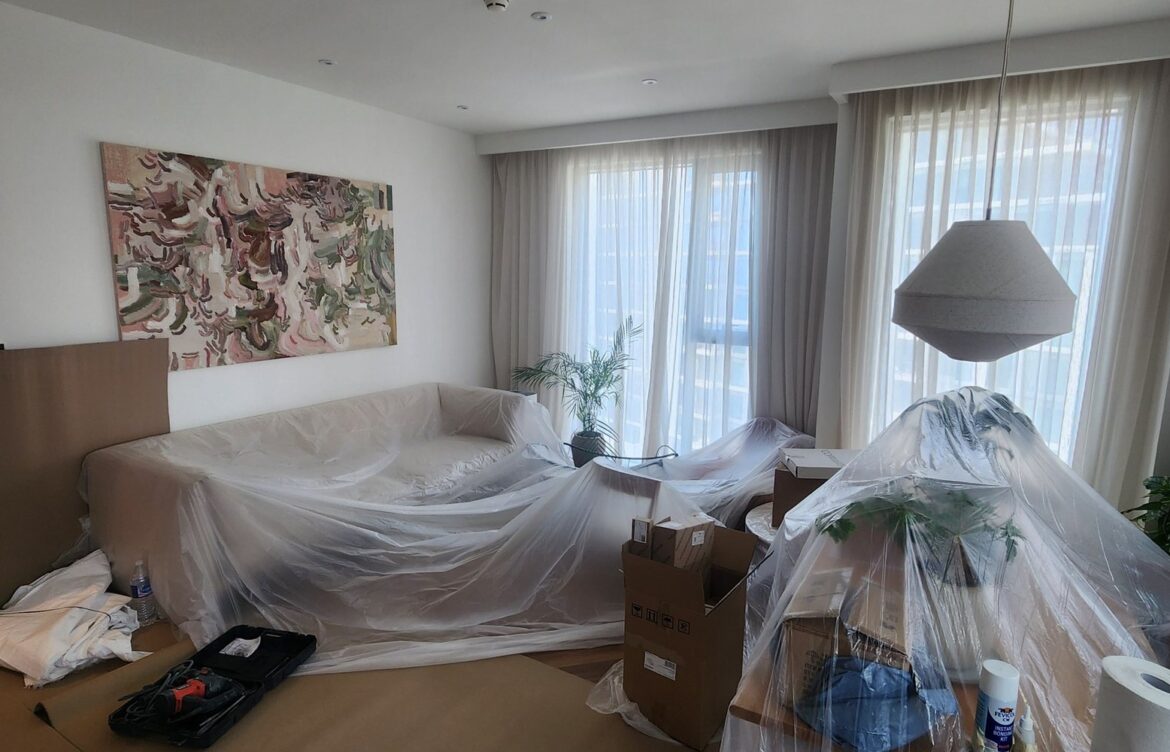
Furniture in the living room: At the client’s request, we covered existing furniture with protective film. This is especially important when working in adjacent rooms, as dust from tile chipping and plaster removal spreads quickly and far.
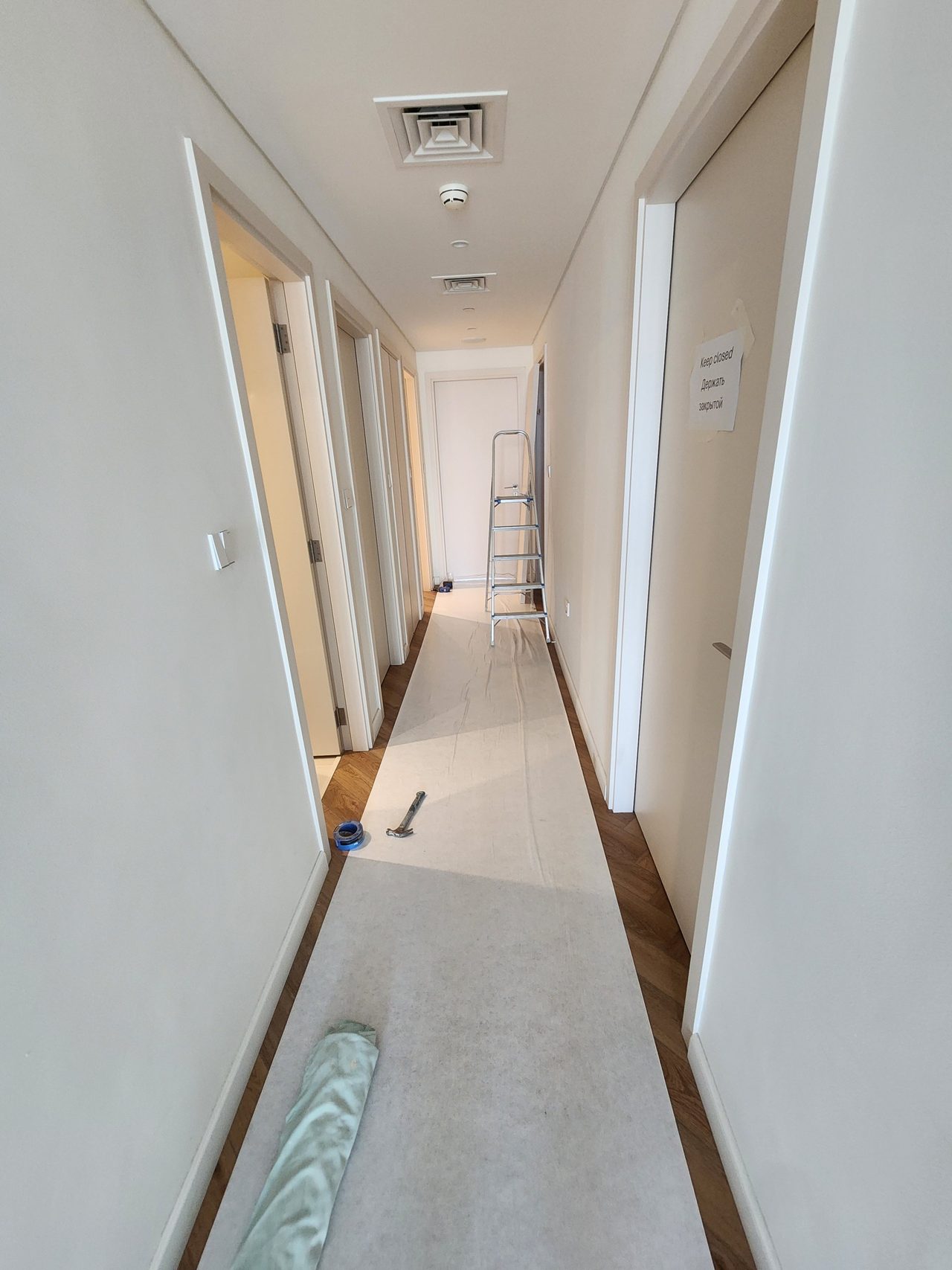
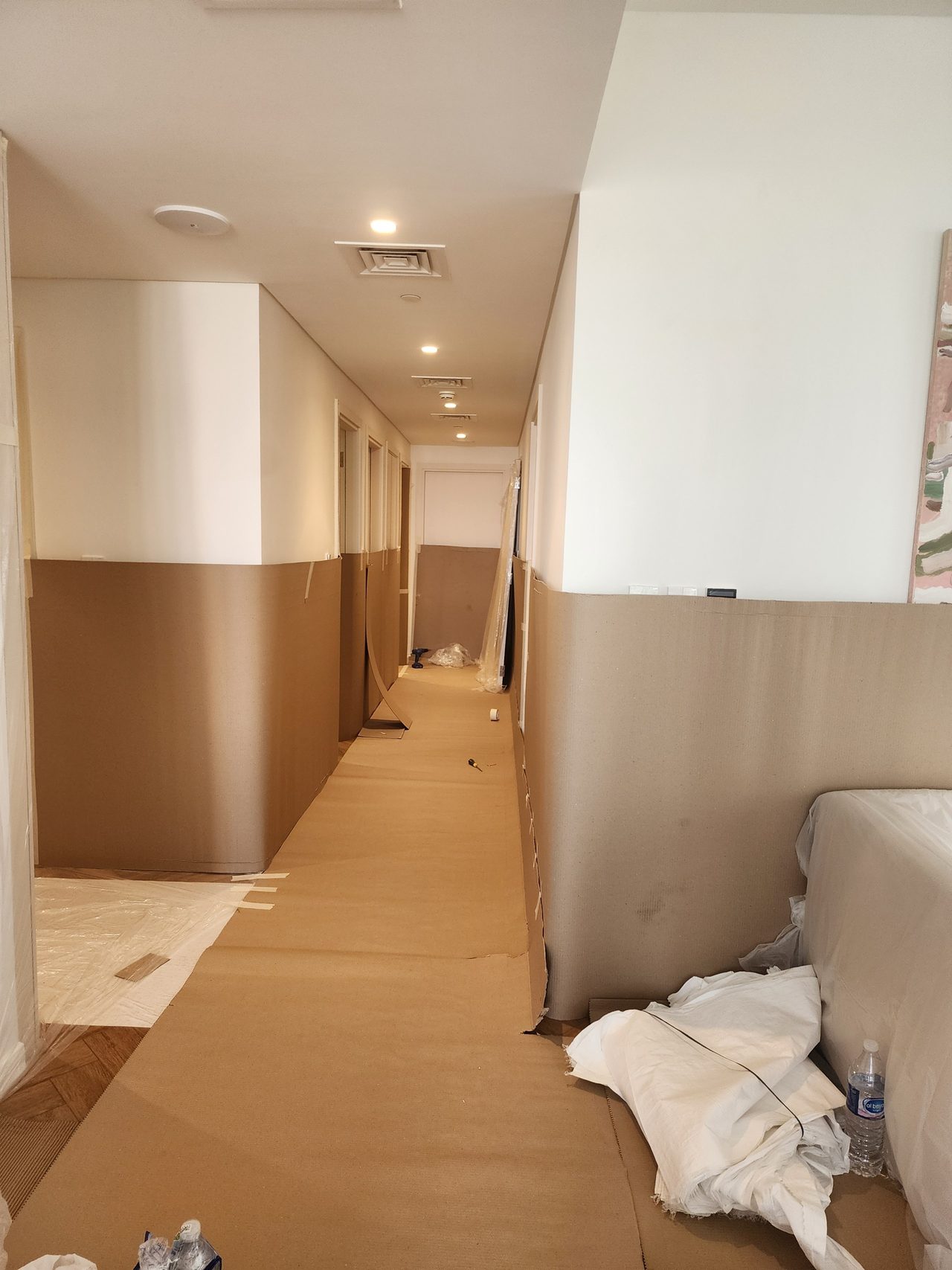
Walls and doors in the corridor: Corrugated cardboard at human height protected against tool impacts and water splashes. Bathroom doors were removed, but their frames and trim remained in place—we protected them before work began.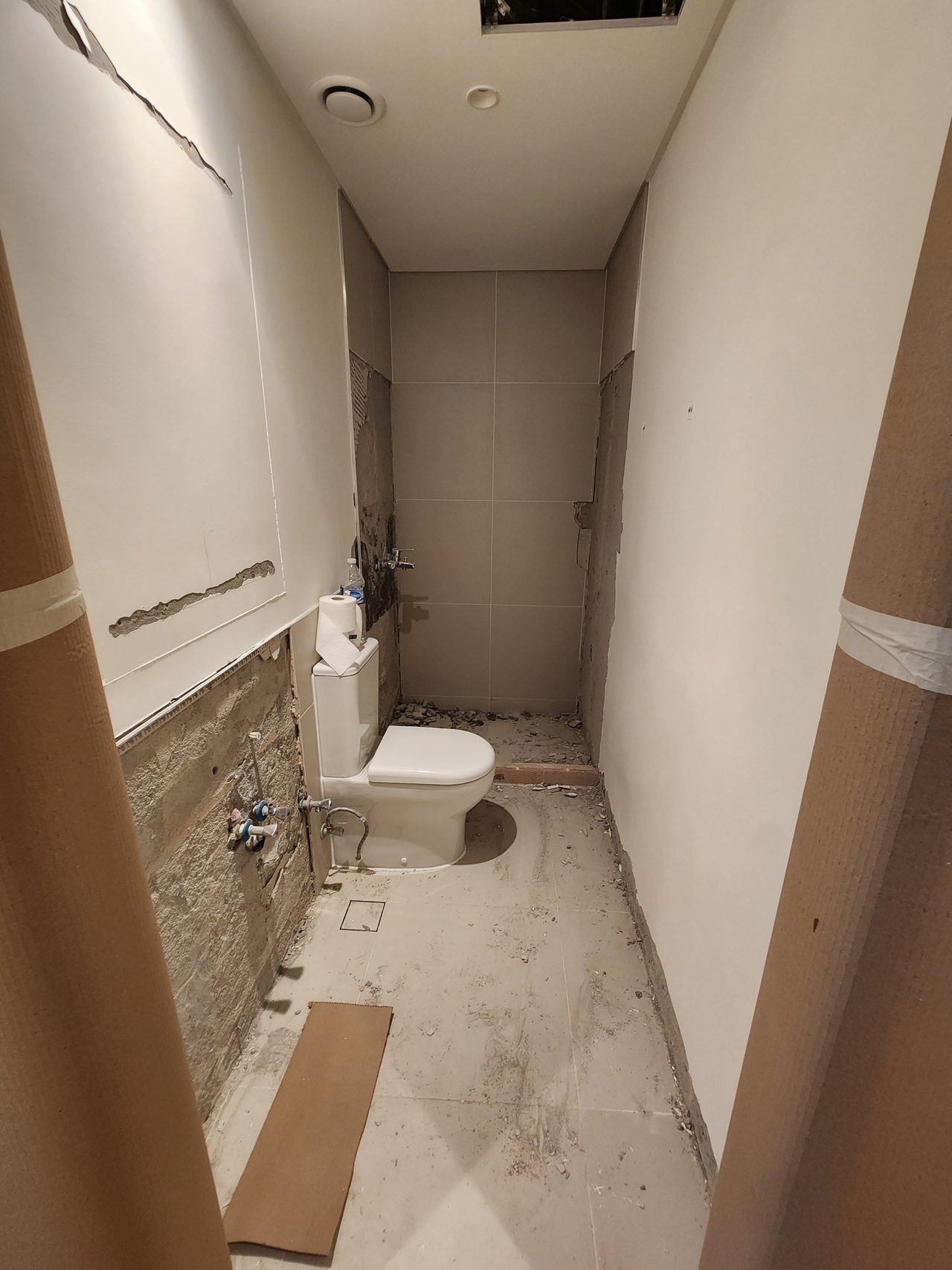
Stage 2: Bathrooms—Scope of Work and Risks Without Protection
In stage 2, we worked in two bathrooms simultaneously. Here’s what was required:
Children’s bathroom:
- Tile removal from floor (3.3 m²) and walls (7.45 m²)
- Removal of shower set, drains (main and emergency), toilet, sink, faucets
- Screed removal under new drain
- Wall chasing for electrical (2 sconce points) and plumbing
- Waterproofing of wet zone
- Removal of front wall of installation shaft and its restoration with installation of concealed shower set
- Ceiling and wall painting behind mirror
Guest bathroom:
- Tile removal from floor and walls (approximately 7 m² on walls)
- Removal of shower partition, set, drains, toilet, sink, faucets
- Ceiling and two wall painting
- Floor and wall tile replacement
Why protection is critical at this stage:
- Dust from demolition: Tile chipping and plaster removal create a dust cloud that penetrates adjacent rooms through door gaps and ventilation
- Moisture: Waterproofing, priming and surface washing create humidity that can damage paint, wallpaper and furniture
- Mechanical damage: Door removal, material and tool movement—all pose risks to finished surfaces
- Cleanup time: Without protection, dust settles everywhere, and cleanup can take days instead of hours
How We Organized Protection in Practice
Phase 1: Entrance and Corridor Preparation
Before work began, we established a protective perimeter:
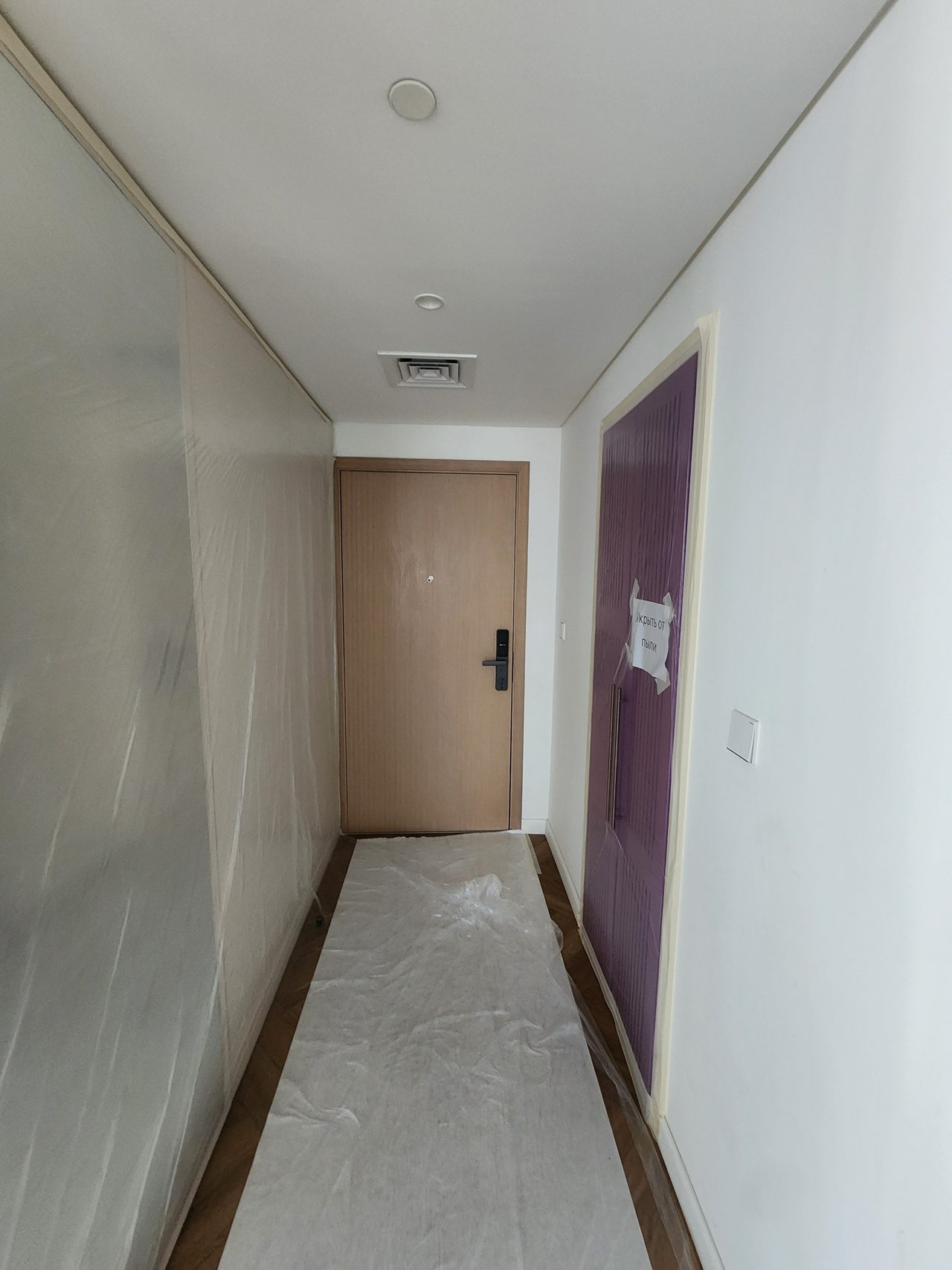
- Entrance door: panel removed, frame and trim protected with film
- Corridor: floor completely covered with heavy cardboard and film, walls covered with corrugated cardboard to 2 m height
- Transition to living room: additional protection layer to prevent dust from entering the living space
Phase 2: Bathroom and Adjacent Area Protection
In each bathroom:
- Floor covered with cardboard and film (protection from moisture and dust)
- Walls in work zones protected with film
- All water supply and drainage points capped (6 points in children’s, 5 in guest)—this prevents dust from entering pipes
- Ventilation openings covered with film
Phase 3: Furniture and Décor Protection in Living Room
At the client’s request, we covered existing furniture with protective covers and film. This is especially important because:
- Dust from tile removal spreads up to 10 m
- Moisture from waterproofing can damage upholstery and wood
- Mechanical damage during material movement is a frequent source of claims
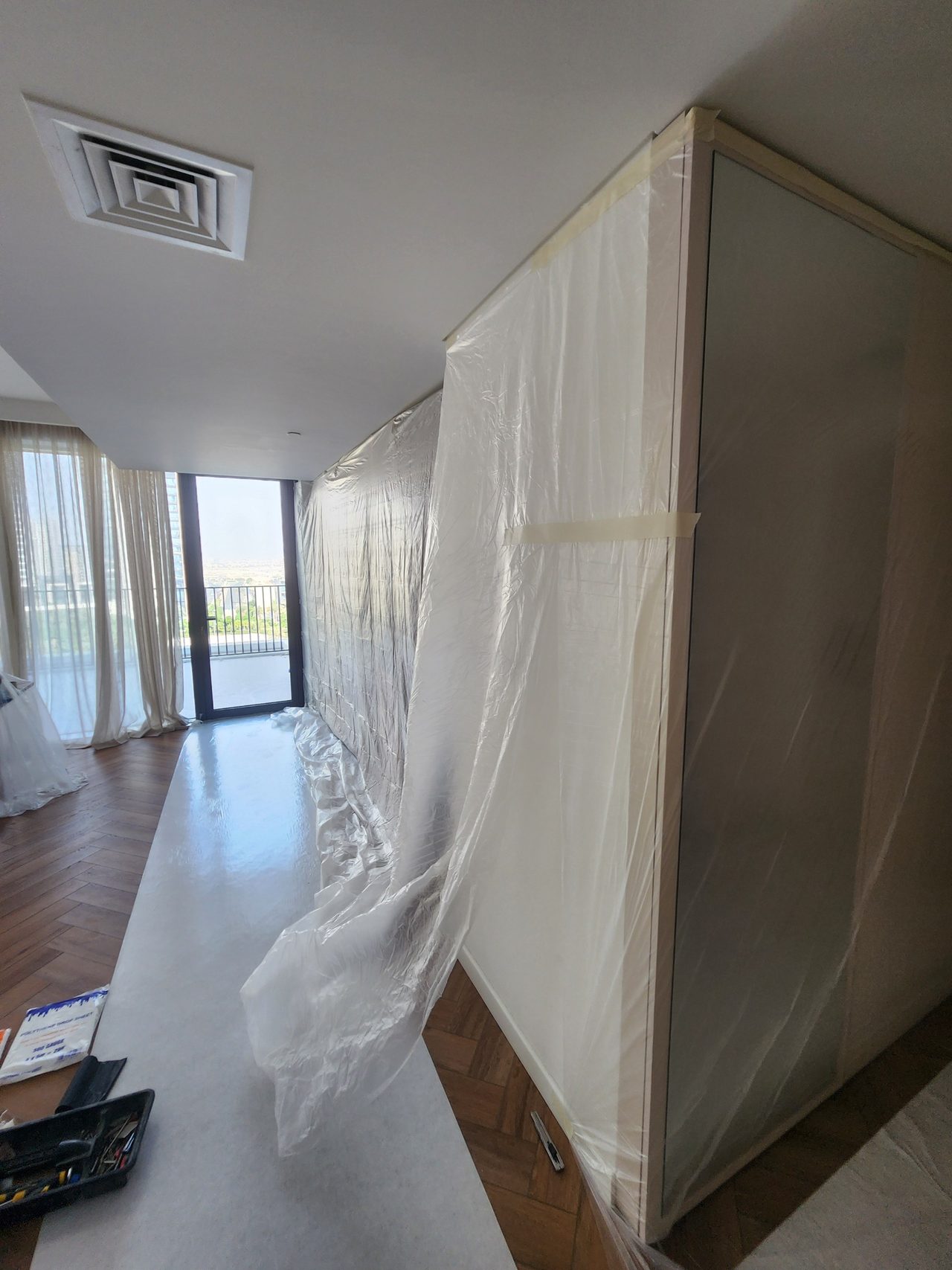
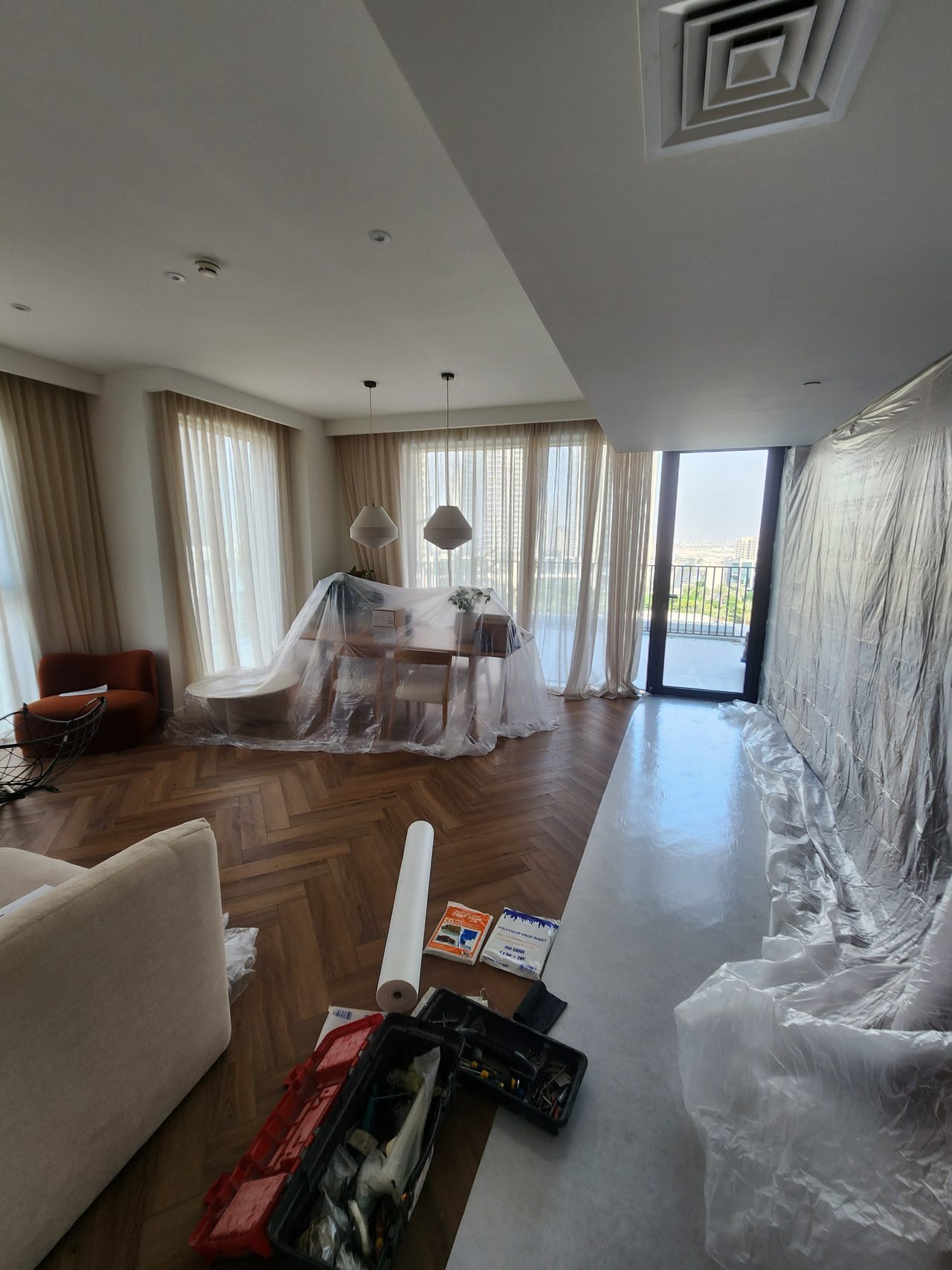
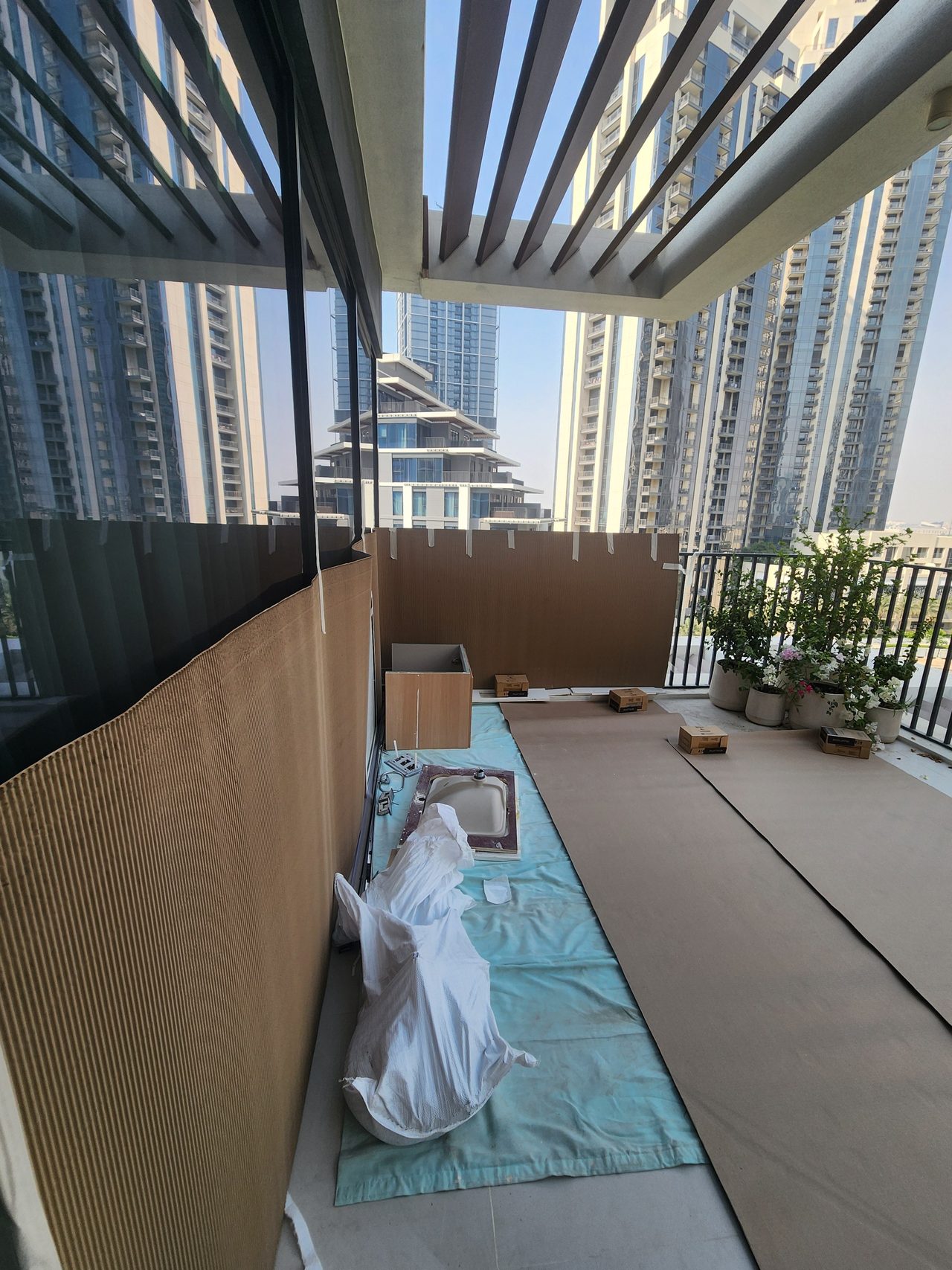
Phase 4: Balcony and External Area Protection
If a balcony adjoins the bathrooms, we also protect it:
- Floor: film + heavy cardboard
- Railing and walls: corrugated cardboard
- This prevents dust and moisture from reaching external surfaces
Materials and Protection Technology
We use a multi-layer protection system that has proven itself on hundreds of Dubai projects:
For floors:
- First layer: heavy polyethylene film (0.2 mm thickness)—moisture protection
- Second layer: corrugated cardboard or kraft paper—mechanical damage and slip protection
- Fastening: painter’s tape (leaves no marks on finished surfaces)
For walls:
- Corrugated cardboard to 2 m height in high-traffic areas
- Film on remaining height
- Special attention to corners and door openings
For furniture and décor:
- Protective covers made from non-woven material (breathable, prevents condensation)
- Additional film for moisture-sensitive items
- Soft padding at contact points with tools
For engineering communication points:
- Caps on all open pipe and cable ends
- This prevents dust and moisture from entering systems
Quality Control of Protection: What to Check on Site
Protection is not a one-time operation. We conduct daily inspections:
Morning (before work begins):
- Check film and cardboard integrity
- Check door opening seals
- Check caps on pipes and cables
During the day:
- Monitor that workers don’t damage protection
- Immediately restore damaged areas
- Remove dust from protective layers (to prevent it from entering adjacent zones)
Evening (after work completion):
- Wet cleaning of protected areas
- Check for dust absence in adjacent rooms
- Photo documentation of protection condition for report
On the Dubai Creek Harbour project, we maintained photo documentation of each protection stage. This allowed the client to see that their property was under control and simplified work approval.
Why This Saves Money and Time
Savings on rework: If dust damages finished surfaces in adjacent rooms, rework will be needed. Rework cost often exceeds protection cost by 5–10 times.
Accelerated work: Workers work faster when they don’t need to constantly clean dust and don’t worry about damaging the client’s property.
Simplified cleanup: With protection, post-stage cleanup takes a few hours. Without it—several days.
Reduced conflicts: When clients see their property is protected, they’re more relaxed about dust and noise. This improves relationships and simplifies approval of additional work.
Dubai standards compliance: In Dubai, building management often requires protection of common areas during apartment work. Proper protection means compliance with these requirements and avoiding fines.
Specifics of Work in Dubai Creek Harbour
Dubai Creek Harbour is a modern residential complex with high finishing standards. This means:
High property preservation requirements: Building management carefully monitors that work in one apartment doesn’t damage adjacent units and common areas.
Dust and noise control: The complex has restrictions on work hours and dust protection requirements. Proper protection helps meet these requirements.
Finished surface quality: Apartments in Dubai Creek Harbour often have premium finishes (natural stone, expensive tile, parquet). Protecting these surfaces is critical.
Humidity and climate: Dubai has high humidity in summer months. Moisture protection prevents mold and material damage.
How MWS Controls Protection and Reporting
On each project, we use a control system that includes:
Photo documentation: Each protection stage is photographed. This allows the client to see work is complete and serves as evidence in case of disputes.
Checklists: Before work begins and after completion, we verify all protection points against a checklist. This eliminates oversights.
Daily reports: The client receives daily work progress reports, including protection photos and site condition.
Building management coordination: We coordinate work with Dubai Creek Harbour management to ensure all requirements are met.
Final inspection: Before stage handover, we conduct a joint inspection with the client. We verify protection integrity, dust absence in adjacent zones, and property condition.
What the Owner Should Check Before Work Begins
If you’re planning a major bathroom renovation in Dubai Creek Harbour or another complex, pay attention to the following:
1. Entrance and Corridor Protection
- Floor completely covered (cardboard + film)
- Walls protected with corrugated cardboard to 2 m height
- Entrance door protected or removed with frame protection
2. Adjacent Room Protection
- Doors to living room and bedrooms closed and sealed
- Furniture in adjacent rooms covered
- Ventilation openings closed
3. Bathroom Protection
- Floor covered with cardboard and film
- All open pipes and cables capped
- Ventilation closed
4. Documentation
- Photos of protection before work begins
- Daily work progress reports
- Photos after stage completion
5. Building Management Coordination
- Ensure the contractor coordinated work with building management
- Verify compliance with work hour restrictions and protection requirements
Conclusion: Protection Is an Investment in Quality
On the Dubai Creek Harbour project, we protected virtually every surface that could accidentally be damaged or become dusty. This took additional preparation time but saved time on rework and cleanup, and most importantly—preserved the client’s property in perfect condition.
Major bathroom renovation is a complex process requiring demolition, wall chasing, waterproofing and many other tasks. Without proper protection, the risk of property damage is very high. With protection—work proceeds smoothly and the client is satisfied with the result.
If you’re planning renovation in Dubai Creek Harbour or another complex, contact an experienced contractor who understands the importance of protection and has a quality control system. This guarantees your project will be completed on time, within budget and without unpleasant surprises.
Contact MWS for consultation on your Dubai renovation project. We’ll help you plan work, select proper materials and protection, and ensure everything is executed at the highest level.
Frequently Asked Questions
How long does surface protection take before starting a bathroom renovation?
On a 85 m² site (from entrance to bathrooms), preparation and protection took 1–2 days. This included floor covering with cardboard and film, wall protection with corrugated cardboard, furniture covering in the living room and capping of engineering communications. Time depends on site area, furniture quantity and room configuration complexity. The protection investment pays for itself through savings on rework and cleanup.
What affects the cost of protection during renovation in Dubai?
Main factors:
- Site area: Larger area requires more materials
- Finish type: Premium finishes (natural stone, expensive tile) require more careful protection
- Work scope: Tile and plaster removal creates more dust than simple painting, requiring more reliable protection
- Building management requirements: Some complexes (like Dubai Creek Harbour) have higher protection requirements, which may increase cost
- Furniture presence: Protecting existing furniture adds materials and time
Protection cost typically represents 5–10% of main work cost but saves 20–30% on rework and cleanup.
What should be checked before approving contractor handover after stage completion?
Before approval, check the following:
- Dust absence: Walk through all rooms, including adjacent ones. Dust should not be visible on furniture, shelves, windows
- Finished surface integrity: Check floors, walls, ceilings in adjacent rooms for scratches, stains, damage
- Furniture condition: If furniture was covered, verify it’s undamaged and clean
- Engineering system operation: Ensure water, electricity, ventilation work normally
- Documentation: Request photo report of work progress and final inspection
- Cleanup: All protective materials should be removed, site should be clean
If you find damage, document it with photos and require correction before final handover.